


Schaumburg Marketplace
Connecting Local Business
And Empowering Community
951 N Plum Grove Rd, Suite C
Schaumburg, IL 60173
◆ CONNECTING LOCAL BUSINESS · EMPOWERING COMMUNITY


Money
CFPB Ends Public Complaint Narratives: What Consumers Lose and What Still Remains
The CFPB has stopped discretionary publication of consumer complaint stories and related visualizations, changing how the public can research banks, credit firms and lenders.
September 21, 2026 · 4 min read
I'm a paragraph. I'm connected to your collection through a dataset. Click Preview to see my content. To update me, go to the Data Manager.
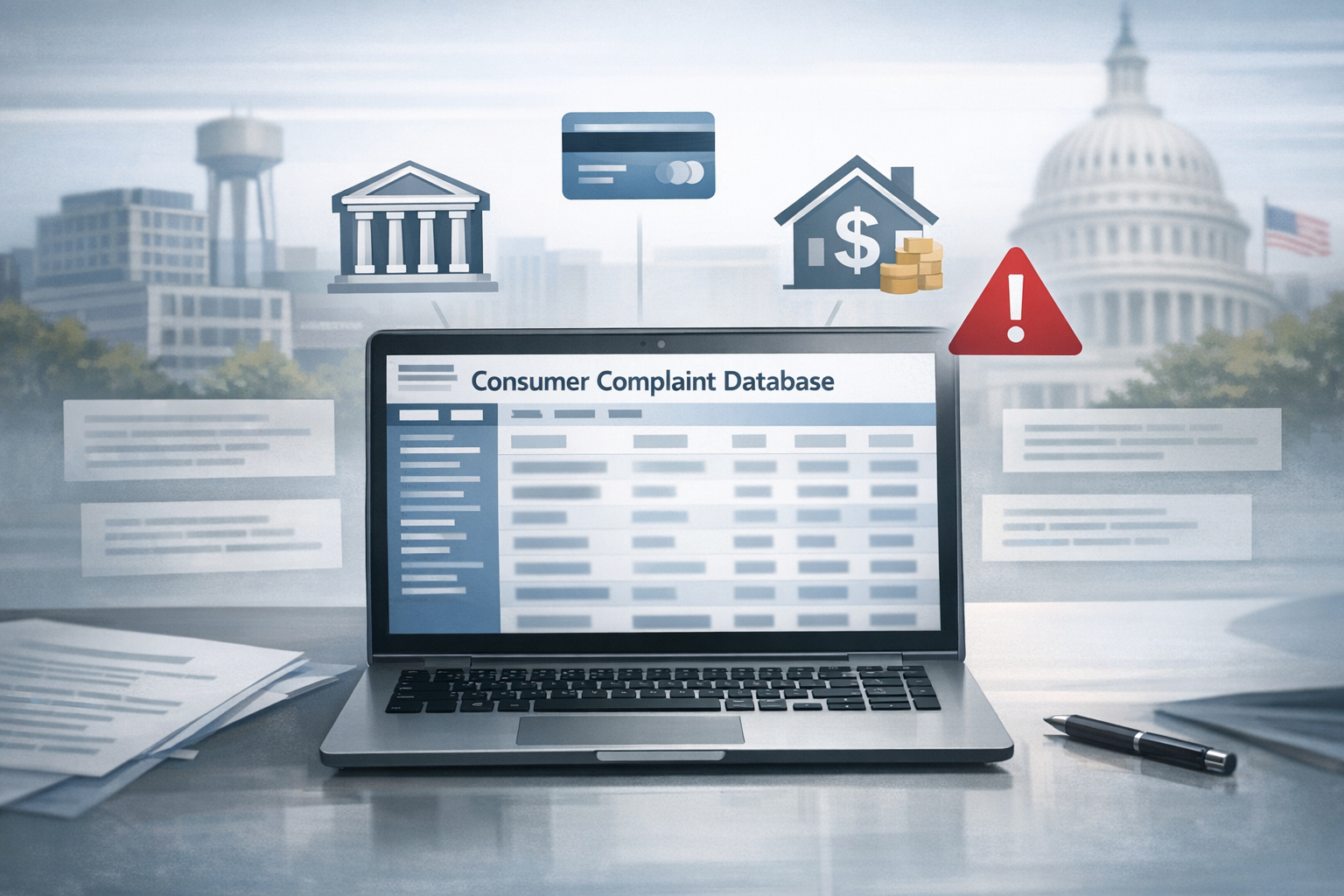
The Consumer Financial Protection Bureau has changed how much of its consumer complaint database the public can see. On August 14, 2026, the agency announced it would stop discretionary publication of consumer complaint narratives and related data visualizations in the Consumer Complaint Database.
The change does not eliminate the database itself. Consumers may still submit complaints to the CFPB, and the agency still maintains complaint records. What changes is public access to the written stories consumers previously could choose to publish after privacy screening.
What changed
For years, the CFPB allowed consumers to opt in to publication of a written description of their experience with a financial company. Those narratives were intended to add context beyond structured complaint fields such as product type, company name, issue category and response status. The agency says it is now ending discretionary publication of those unverified narratives and removing related public visualizations.
The CFPB’s stated reason is that complaint narratives are not verified through the complaint process and may not indicate that a law was broken. The agency said the change is intended to reduce the risk that unverified information could mislead readers.
CFPB technical release notes also reflect the change, stating that narratives and data visualizations have been removed from the complaint database interface. Historical narratives that were previously published remain available through a CFPB archive.
Why it matters for Illinois and Schaumburg readers
This is a national policy shift, not a Schaumburg-specific action. Still, it matters locally because residents in Schaumburg, the Chicago suburbs and across Illinois use banks, credit card companies, mortgage servicers, credit bureaus, debt collectors, fintech apps and other financial firms that may appear in CFPB complaint data.
Before the change, a consumer researching a lender, bank, credit reporting issue or debt collection dispute could sometimes read other consumers’ first-person descriptions. Those narratives were not proof of misconduct, but they could reveal patterns worth asking about, such as repeated confusion over fees, payment processing, credit reporting, loan servicing or customer support.
Without newly published narratives, the public view becomes more structured and less descriptive. That may reduce the chance of readers mistaking unverified allegations for established facts. It also reduces qualitative detail that journalists, researchers and consumers used to understand how financial disputes unfolded.
How to read complaint data responsibly
Complaint databases can be useful, but they have limits. A complaint is a consumer’s report of a problem; it is not the same as a court finding, regulator enforcement action or admission by a company. Larger banks and national financial firms may naturally receive more complaints because they serve more customers, so raw complaint totals do not always show whether one company is riskier than another.
Useful questions for consumers and researchers include: What financial product is involved? Is the issue about credit reporting, fees, mortgage servicing, debt collection, deposits, fraud or another topic? Did the company provide a timely response? Are similar complaints repeated over time? Is there other public evidence, such as enforcement actions, lawsuits or state regulator records?
For readers comparing financial firms, complaint data should be one source among several. Fee schedules, account agreements, loan terms, interest rates, customer service policies and regulatory history all matter. For example, a bank account fee dispute is different from a mortgage servicing dispute, and a credit reporting complaint may involve a credit bureau, lender, collector or all three.
Consumer finance concepts behind the change
Many CFPB complaints involve common consumer finance topics: banking, credit, mortgages, loans, debt collection, scams, fraud and fees. These areas can be confusing because a consumer often deals with multiple companies at once. A mortgage borrower may interact with an originator, servicer and credit bureau. A credit card customer may face interest charges, late fees, fraud claims or credit score effects. A debt collection dispute may involve an original creditor, a third-party collector and credit reporting agencies.
Because the public narratives are no longer being published on a discretionary basis, consumers should pay closer attention to formal documents. For bank accounts, review monthly fees, overdraft policies, transaction limits and dispute deadlines. For loans and mortgages, compare the interest rate, annual percentage rate, closing costs, payment schedule, late fees and servicing rules. For credit reports, check whether information is accurate and whether dispute instructions are clearly provided.
Warning signs in financial services can include pressure to act immediately, unclear fees, promises that sound guaranteed, requests to pay by unusual methods, refusal to provide written terms, or claims that a company can erase accurate credit history. These warning signs are general and do not prove wrongdoing, but they are reasons to slow down and ask for documentation.
This article is for general educational purposes only and is not personalized financial, legal, credit, lending or investment advice.
Main uncertainty
The central uncertainty is how the change will affect public accountability. The CFPB argues that removing unverified narratives reduces confusion. Transparency advocates may view the same change as a loss of public insight into consumer experiences. Both concerns can be true at once: narratives can be informative, but they can also be incomplete, disputed or misunderstood.
For now, consumers can still file complaints with the CFPB and use remaining public complaint information. What they will no longer receive in the same way is the ongoing stream of newly published, first-person complaint stories that once helped explain the details behind some disputes.
Sourcesconsumerfinance.gov the cfpb to cease discretionary publication of complaint…consumerfinance.gov newsroomcfpb.github.io release notesconsumerfinance.gov cfpb consumer complaint database narratives archivecfpbjournal.com cfpb ends publishing of complaint narratives
More in Money High-Yield Savings Check: October 2026 Rates Look Closer to 4.5% Than 5%Oct 5, 2026 SEC Updates Guidance on Protecting Online Investment Accounts From FraudSep 27, 2026 Investor.gov alert urges investors to guard accounts from phishing, smishing and vishingSep 27, 2026 SEC Alert: What Investors Should Do After Identity Theft or a Data BreachSep 27, 2026
Share this articleFacebookXLinkedIn
Explore SchaumburgEvents →Things to Do →Coupons →Classifieds →Jobs →Videos →
SPONSORED

Financial Service Professionals
Financial Services • Wills and Trust
Licensed Financial Service Professionals, Investment Strategies, Kids Education Planning, Mortgage Protection Plan, 401K Rollover Options, Roth/Traditional IRA, Long Term Care, Retirement Income Planning, Life Insurance & Living Benefits, Will & Trust
Licensed

Paid placement. We don't endorse this business. Please verify licenses before hiring.
Keep reading
More local news and guides from Schaumburg Marketplace.