


Schaumburg Marketplace
Connecting Local Business
And Empowering Community
951 N Plum Grove Rd, Suite C
Schaumburg, IL 60173
◆ CONNECTING LOCAL BUSINESS · EMPOWERING COMMUNITY


Money
High-Yield Savings Check: October 2026 Rates Look Closer to 4.5% Than 5%
A review of major October 2026 savings-rate roundups found top high-yield savings offers generally near 4.0% to 4.5% APY, not a verified 5.00%.
October 5, 2026 · 3 min read
I'm a paragraph. I'm connected to your collection through a dataset. Click Preview to see my content. To update me, go to the Data Manager.
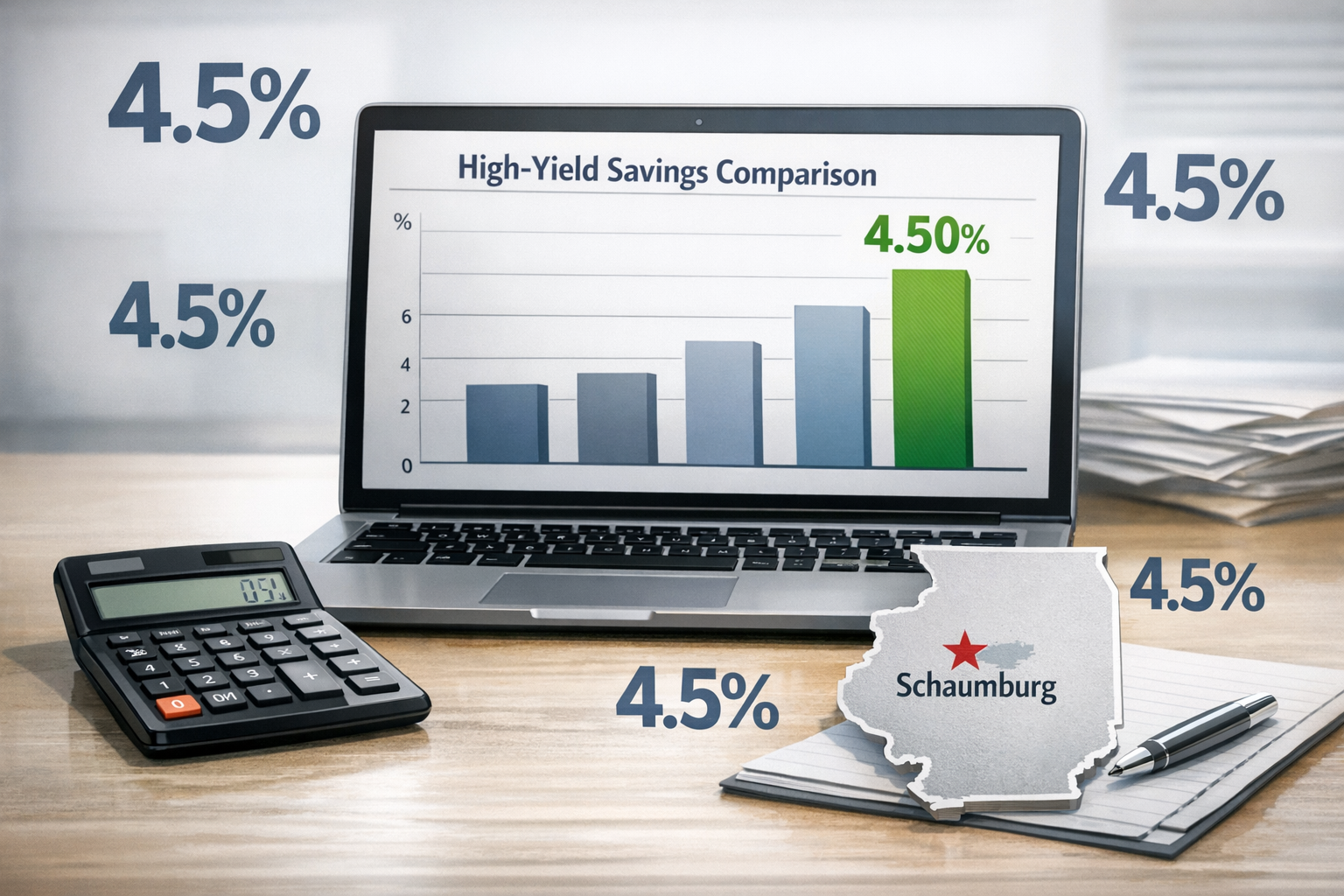
A widely circulated savings-rate claim suggested that an October 2026 high-yield savings account roundup tied to WSJ showed rates up to 5.00% APY. A review of the available WSJ Buy Side reference and other major national rate trackers does not support that figure.
The credible data reviewed points to a lower ceiling: top high-yield savings accounts in early October 2026 were generally clustered around the 4.0% to 4.5% APY range. A WSJ Buy Side listing referenced through an industry profile showed “Today’s High-Yield Savings Rates for October 2, 2026: Up to 4.50%,” while CNBC Select, Fortune and Bankrate also showed leading offers around the low-to-mid 4% range.
What happened
The issue is not that high-yield savings rates are weak. They remain far above what many traditional branch savings accounts pay. The issue is whether the specific “up to 5.00%” claim was supported by the October 2026 sources reviewed.
Based on the available research, it was not. The WSJ-affiliated Buy Side material identified in the review pointed to an upper rate of 4.50%, not 5.00%. CNBC Select’s October 2026 roundup showed a top rate around 4.21% APY. Fortune’s early-October savings-rate coverage showed top rates near 4.50%. Bankrate’s October 2026 listings also showed many competitive accounts around 4.0% to 4.5%, depending on the institution and promotion.
Why it matters for savers
For readers in Schaumburg, the Chicago suburbs and across Illinois, the distinction between 4.50% and 5.00% is not just cosmetic. On a $10,000 balance, a 4.50% APY would produce about $450 over a year if the rate held steady, while 5.00% would produce about $500. The difference grows with larger balances, though actual earnings can change because savings rates are variable.
High-yield savings accounts are commonly used for emergency funds, short-term savings goals and cash reserves. When rate claims are overstated, consumers may waste time chasing offers that are not broadly available, have restrictions, or no longer exist.
What the data shows
The reviewed sources were broadly consistent. The top nationally marketed high-yield savings offers in early October 2026 appeared to sit mostly between 4.0% and 4.5% APY. Some providers may use temporary promotions, balance tiers, direct-deposit requirements or new-customer conditions, which can make advertised rates look more attractive than the practical return for every saver.
No credible Schaumburg-specific or Illinois-specific banking development was identified in the reviewed sources. The rate roundups were national in scope. Many online savings accounts are generally available to Illinois residents, but eligibility, minimums and account terms still need to be checked directly with the bank or credit union.
What to verify before opening an account
APY is only one factor. Savers should also review whether the institution is FDIC-insured or NCUA-insured, whether there are monthly fees, minimum balance rules, transfer limits, account closure fees, rate tiers or promotional expiration dates. FDIC and NCUA insurance limits generally protect eligible deposits up to applicable federal limits, but coverage depends on ownership category and institution.
It is also important to distinguish between product-recommendation sites and newsroom reporting. Buy Side from WSJ is a product-recommendation property associated with The Wall Street Journal brand, but it is not the same as a traditional WSJ newsroom article. Rate roundups from CNBC Select, Fortune and Bankrate are also comparison tools and may have commercial relationships or methodologies that readers should understand.
Main uncertainties and risks
Savings rates can change quickly. Banks often adjust APYs in response to Federal Reserve policy, market competition and funding needs. A rate shown on October 2 or October 5 may not be available later in the month.
The biggest practical risk is assuming that a headline rate applies to everyone. Some accounts require a minimum deposit, cap the balance that earns the highest APY, or attach conditions to qualify for the advertised yield. Others may lower the rate after attracting deposits. Readers should confirm the current APY and terms directly with the financial institution before moving money.
The bottom line: high-yield savings accounts remained competitive in October 2026, but the verified national data reviewed here supports an upper range around 4.5% APY, not a clearly documented 5.00% WSJ-linked offer.
Sourcesmuckrack.com wsj buy sidecnbc.com best high yield savings accountsfortune.com best savings account rates 10 5 2026bankrate.com best high yield interests savings accounts
More in Money SEC Updates Guidance on Protecting Online Investment Accounts From FraudSep 27, 2026 Investor.gov alert urges investors to guard accounts from phishing, smishing and vishingSep 27, 2026 SEC Alert: What Investors Should Do After Identity Theft or a Data BreachSep 27, 2026 Budgeting Apps Got New 2026 Rankings. Read Them With CautionSep 27, 2026
Share this articleFacebookXLinkedIn
Explore SchaumburgEvents →Things to Do →Coupons →Classifieds →Jobs →Videos →
SPONSORED

Financial Service Professionals
Financial Services • Wills and Trust
Licensed Financial Service Professionals, Investment Strategies, Kids Education Planning, Mortgage Protection Plan, 401K Rollover Options, Roth/Traditional IRA, Long Term Care, Retirement Income Planning, Life Insurance & Living Benefits, Will & Trust
Licensed

Paid placement. We don't endorse this business. Please verify licenses before hiring.
Keep reading
More local news and guides from Schaumburg Marketplace.