


Schaumburg Marketplace
Connecting Local Business
And Empowering Community
951 N Plum Grove Rd, Suite C
Schaumburg, IL 60173
◆ CONNECTING LOCAL BUSINESS · EMPOWERING COMMUNITY


Money
Investor.gov alert urges investors to guard accounts from phishing, smishing and vishing
A recent Investor.gov alert explains how scammers use emails, texts and calls to target investment and financial accounts, and what account holders can do before responding.
September 27, 2026 · 4 min read
I'm a paragraph. I'm connected to your collection through a dataset. Click Preview to see my content. To update me, go to the Data Manager.
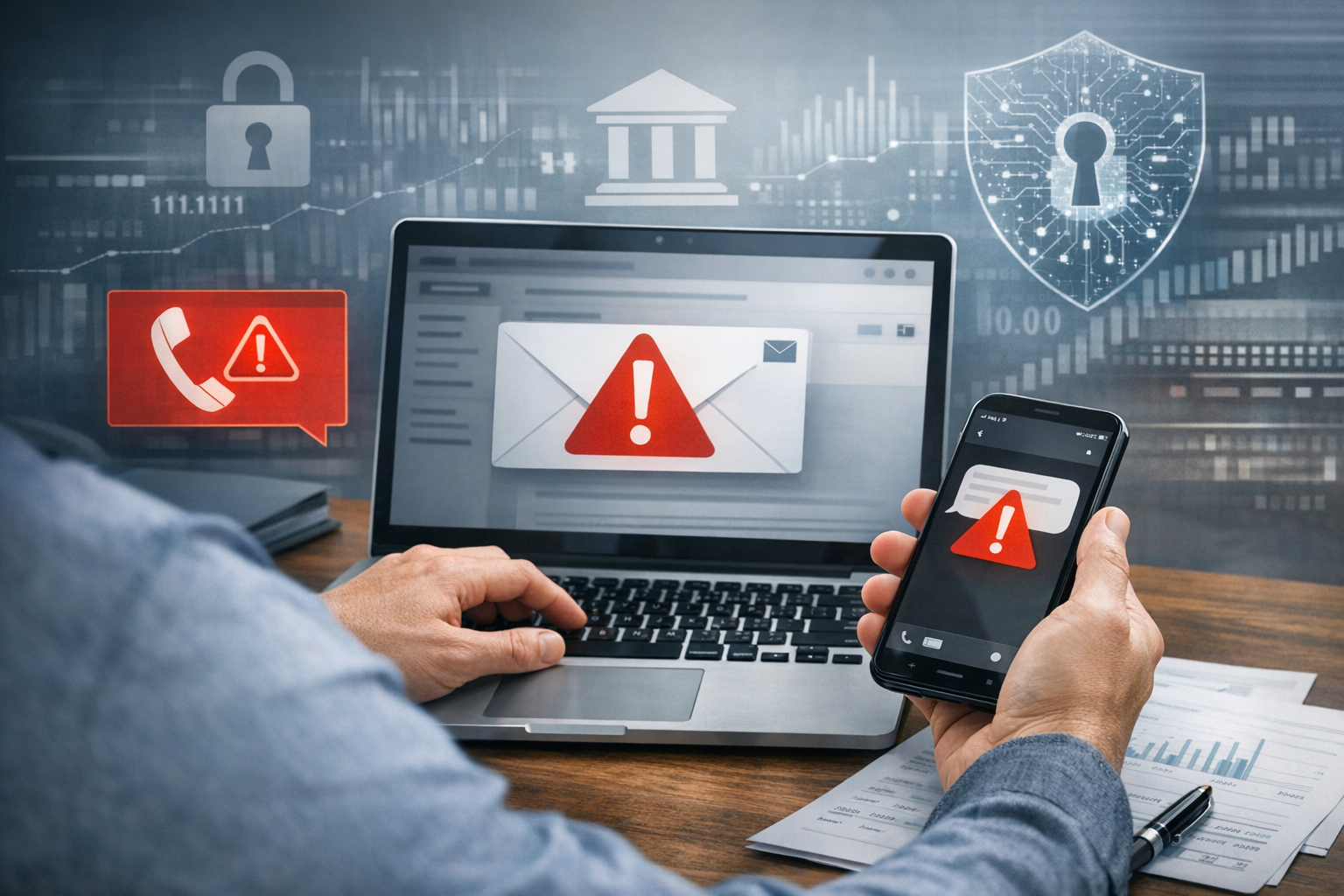
Investor.gov, the investor-education website associated with the U.S. Securities and Exchange Commission, has issued a recent investor alert focused on a familiar but evolving problem: scammers trying to reach financial and investment accounts through phishing, smishing and vishing.
The alert is national in scope and does not identify a Schaumburg- or Illinois-specific incident. Still, its guidance applies to investors and account holders anywhere in the United States, including readers in the Chicago suburbs who use brokerage, retirement, bank or other financial accounts online.
What happened
The Investor.gov alert explains that criminals may pose as trusted firms, financial professionals, government agencies or other legitimate contacts to trick people into sharing passwords, account numbers, authentication codes or other sensitive information. The three terms describe related tactics: phishing typically uses email or websites, smishing uses text messages, and vishing uses phone calls or voice messages.
The central message is simple: do not assume a message is genuine just because it looks official, uses a familiar logo, creates urgency or appears to come from a known institution. Instead, investors are urged to verify contacts through official channels and avoid giving sensitive information to anyone who reaches out unexpectedly.
Why it matters for investment accounts
Investment accounts can be attractive targets because they may hold cash, securities, retirement assets or linked bank information. If a scammer gets access, the harm can go beyond a single fraudulent charge. A compromised account can lead to unauthorized transfers, changed contact information, fraudulent securities transactions or identity theft.
This is especially important because many financial accounts now rely on digital tools: online portals, mobile apps, email notices and one-time authentication codes. Those features can improve convenience and security, but scammers often try to exploit the human side of the process by pressuring people to click quickly, answer a call, or share a code they should keep private.
What the guidance shows
The verified federal guidance points to several consistent warning signs. A message may be suspicious if it asks for account credentials, pressures the recipient to act immediately, claims there is a serious account problem, offers an unexpected investment opportunity, or directs the person to a link or phone number that cannot be independently verified.
Investor.gov’s broader fraud-prevention materials also emphasize checking the background and registration status of investment professionals, being cautious with unsolicited investment pitches, and protecting personal financial information. The Federal Trade Commission’s phishing guidance similarly advises consumers to avoid clicking suspicious links and to contact companies through known, official websites or phone numbers.
Practical steps readers can take
For general education, the safest routine is to slow down before responding. If a text, email or call claims to be from a brokerage, bank, retirement-plan provider or government agency, contact the organization using a phone number or website you already know is legitimate. Do not rely on contact information supplied inside the suspicious message.
Readers can also use stronger account protections where available, such as multifactor authentication, account alerts and unique passwords. Multifactor authentication generally means a login requires something beyond a password, such as a one-time code or app approval. However, even those codes can be misused if a scammer persuades someone to read them aloud or type them into a fake website.
Common warning signs include requests for passwords, PINs, Social Security numbers, remote access to a device, cryptocurrency transfers, gift cards, wire transfers, or secrecy. Another red flag is a caller or message that says an account will be frozen, closed or seized unless the recipient acts immediately.
Questions to ask before responding
Before clicking, calling back or sharing information, account holders can ask: Did I initiate this contact? Is the sender’s address or phone number actually the institution’s official one? Does the message demand urgency or secrecy? Is it asking for information the company should not need by email, text or phone? Can I confirm the issue by logging in through the official website or app rather than a link in the message?
If an investment pitch is involved, additional questions matter: Is the person or firm registered? Are the promised returns unusually high or described as guaranteed? Is the opportunity being pushed through social media, a dating app, a private message or a relationship-based approach? Investor.gov specifically maintains resources on investment-fraud red flags and relationship-based investment scams.
Main uncertainties and risks
The available research is based on federal educational materials, not a local enforcement case. The sources do not provide Schaumburg-specific complaint numbers, Illinois loss totals or a list of companies being impersonated in the alert. Scam tactics also change quickly, so a checklist cannot capture every possible variation.
The larger risk is behavioral: scammers often succeed by making a request feel urgent, routine or emotionally persuasive. That is why the federal guidance repeatedly points back to verification, official reporting channels and caution with unsolicited contacts.
If someone believes they have shared credentials or financial information with a scammer, the general educational takeaway is to act quickly: contact the financial institution through official channels, change compromised passwords, monitor accounts, and use appropriate government reporting resources such as the FTC and SEC investor-protection channels.
Educational note: This article is for general educational purposes only and is not personalized financial, investment, tax, credit, lending, retirement or legal advice.
Sourcesinvestor.gov dont get ished tips protect your investment and financial…investor.gov protect your moneyinvestor.gov how avoid fraudinvestor.gov relationship investment scamconsumer.ftc.gov how recognize avoid phishing scamssec.gov resources investors
More in Money SEC Updates Guidance on Protecting Online Investment Accounts From FraudSep 27, 2026 SEC Alert: What Investors Should Do After Identity Theft or a Data BreachSep 27, 2026 Budgeting Apps Got New 2026 Rankings. Read Them With CautionSep 27, 2026
Share this articleFacebookXLinkedIn
Explore SchaumburgEvents →Things to Do →Coupons →Classifieds →Jobs →Videos →
SPONSORED

Financial Service Professionals
Financial Services • Wills and Trust
Licensed Financial Service Professionals, Investment Strategies, Kids Education Planning, Mortgage Protection Plan, 401K Rollover Options, Roth/Traditional IRA, Long Term Care, Retirement Income Planning, Life Insurance & Living Benefits, Will & Trust
Licensed

Paid placement. We don't endorse this business. Please verify licenses before hiring.
Keep reading
More local news and guides from Schaumburg Marketplace.