


Schaumburg Marketplace
Connecting Local Business
And Empowering Community
951 N Plum Grove Rd, Suite C
Schaumburg, IL 60173
◆ CONNECTING LOCAL BUSINESS · EMPOWERING COMMUNITY


Money
SEC bulletin explains why fund payouts are not the same as investment gains
A new SEC Investor.gov bulletin explains how mutual fund, ETF and closed-end fund distributions work, including return of capital, NAV changes and tax considerations.
September 21, 2026 · 4 min read
I'm a paragraph. I'm connected to your collection through a dataset. Click Preview to see my content. To update me, go to the Data Manager.
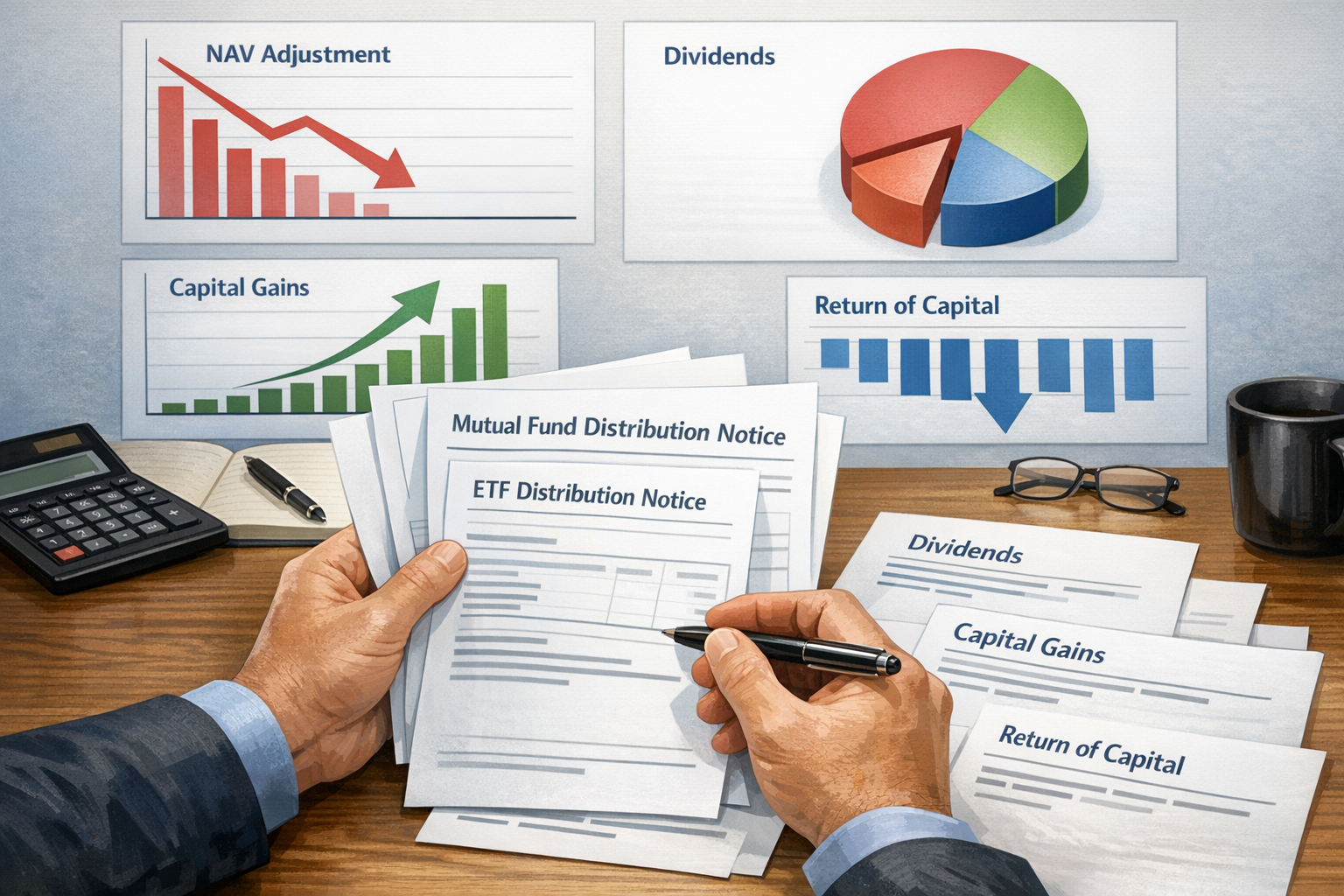
The U.S. Securities and Exchange Commission’s Office of Investor Education and Assistance has published an Investor.gov bulletin explaining a common source of confusion for fund shareholders: distributions from mutual funds, exchange-traded funds, closed-end funds and similar SEC-regulated investment vehicles.
The Aug. 19, 2026 bulletin is national in scope and applies broadly to U.S. investors, including residents of Schaumburg and Illinois who hold funds in taxable brokerage accounts, retirement accounts or other investment accounts. It does not announce a new rule or recommend any fund. Instead, it explains how fund payouts work and why a distribution should not automatically be read as a sign that a fund is performing well.
What happened
The SEC staff bulletin describes fund distributions as payments made to shareholders from sources such as dividends, interest, capital gains and, in some cases, a return of capital. Funds may make payouts monthly, quarterly, annually or on another schedule, but the SEC emphasizes that distributions are not guaranteed.
The bulletin also explains that when a fund pays a distribution, the fund’s net asset value, or NAV, generally declines by the amount of the distribution. For exchange-traded funds and closed-end funds, the market price often adjusts as well. That means a shareholder receiving a payout may also see the quoted value of the shares move lower around the distribution date.
Why it matters to investors
Fund distributions can feel like income, but they have different meanings depending on the source of the payment. A distribution funded by dividends or interest is different from one funded by realized capital gains, and both are different from a return of capital.
A return of capital means that part of the payout is effectively coming from the investor’s own invested money rather than from new earnings. The SEC bulletin notes that return of capital can reduce a shareholder’s cost basis and may affect future tax results. If a fund is making a payment that includes return of capital, it may issue what is known as a Section 19(a) notice. That notice is intended to help shareholders understand the estimated source of the distribution, although final tax information may arrive later on annual tax forms.
What the data and mechanics show
The key financial mechanics are straightforward: a fund’s NAV represents the per-share value of its underlying assets after liabilities. When cash leaves the fund through a distribution, the fund has fewer assets, so the NAV is reduced. This adjustment is normal and does not, by itself, show whether the fund has created or lost economic value for the shareholder.
For example, a shareholder might receive a cash distribution while the share price or NAV drops by a corresponding amount. The investor has cash in hand, but the fund shares may be worth less immediately after the payout. That is why the SEC warns investors not to treat the size or frequency of a distribution as a substitute for reviewing total return, expenses, risks and the fund’s investment strategy.
The bulletin also notes that shareholders may be able to reinvest distributions. Reinvestment uses the distribution to buy additional fund shares rather than paying cash to the investor. Over time, reinvestment can increase the number of shares owned, but it can also create tax or fee considerations depending on the account type and the fund’s terms.
Tax issues can differ by account and payout type
The tax treatment of fund distributions depends on factors such as whether the account is taxable or tax-advantaged, what type of income the fund distributed, and whether any portion is classified as return of capital. IRS Publication 550 provides broader information on investment income, including dividends and capital gains.
In a taxable account, fund distributions may create taxable income even if the investor reinvests the money rather than taking cash. Return of capital may not be taxed in the same way as ordinary income when received, but it can reduce cost basis, which may affect gain or loss calculations when shares are sold. Retirement accounts and other tax-advantaged accounts can have different rules.
This article is for general educational purposes only and is not personalized financial, investment, tax or legal advice. Investors with questions about their own accounts, Illinois tax treatment or federal tax reporting should consult qualified professionals or review official fund and tax documents.
Practical questions shareholders can ask
Before relying on a fund distribution for income or judging a fund by its payout, investors can review several basic questions: What portion of the distribution came from dividends, interest, capital gains or return of capital? Did the fund issue a 19(a) notice? How did the NAV change after the distribution? Are distributions being reinvested or paid in cash? What expenses does the fund charge? How are distributions reported for tax purposes?
These questions are especially relevant for investors who compare funds by yield alone. A high distribution rate may reflect a fund’s income generation, but it also may include capital gains or return of capital. Without knowing the source, the payout figure can be misleading.
Main uncertainties and risks
The SEC bulletin explains concepts rather than predicting fund results. Future distributions can change because they depend on fund earnings, market conditions, portfolio decisions and fund policies. A fund that has paid regular distributions in the past may reduce, suspend or alter those payments.
Another uncertainty is tax classification. A fund may provide estimates during the year, but final tax character can differ when year-end reporting is completed. Investors also face market risk, interest-rate risk, credit risk, management risk and fee drag depending on the type of fund they own.
For Schaumburg and Illinois readers, the main takeaway is not local-specific but broadly applicable: a fund payout is only one part of the investment picture. Understanding the source of a distribution, how it affects NAV and how it may be taxed can help investors read fund statements and notices more carefully.
Sourcesinvestor.gov fund distributions investor bulletininvestor.govinvestor.gov characteristics mutual funds exchange traded fundsirs.gov p550sec.gov resources investors
More in Money Tax-Free Municipal Bond Fund Lists: What Illinois Investors Should CheckOct 16, 2026 High-Yield Savings Check: October 2026 Rates Look Closer to 4.5% Than 5%Oct 5, 2026 SEC Updates Guidance on Protecting Online Investment Accounts From FraudSep 27, 2026 Investor.gov alert urges investors to guard accounts from phishing, smishing and vishingSep 27, 2026
Share this articleFacebookXLinkedIn
Explore SchaumburgEvents →Things to Do →Coupons →Classifieds →Jobs →Videos →
SPONSORED

Financial Service Professionals
Financial Services • Wills and Trust
Licensed Financial Service Professionals, Investment Strategies, Kids Education Planning, Mortgage Protection Plan, 401K Rollover Options, Roth/Traditional IRA, Long Term Care, Retirement Income Planning, Life Insurance & Living Benefits, Will & Trust
Licensed

Paid placement. We don't endorse this business. Please verify licenses before hiring.
Keep reading
More local news and guides from Schaumburg Marketplace.