


Schaumburg Marketplace
Connecting Local Business
And Empowering Community
951 N Plum Grove Rd, Suite C
Schaumburg, IL 60173
◆ CONNECTING LOCAL BUSINESS · EMPOWERING COMMUNITY


Health & Wellness
Coffee, Gut Bacteria, And The Active Mind
A small study tested coffee abstinence and reintroduction, finding gut microbiome changes linked with mood and cognition measures. For active readers, the takeaway is curiosity—not proof that coffee boosts exercise performance.
September 29, 2026 · 3 min read
I'm a paragraph. I'm connected to your collection through a dataset. Click Preview to see my content. To update me, go to the Data Manager.
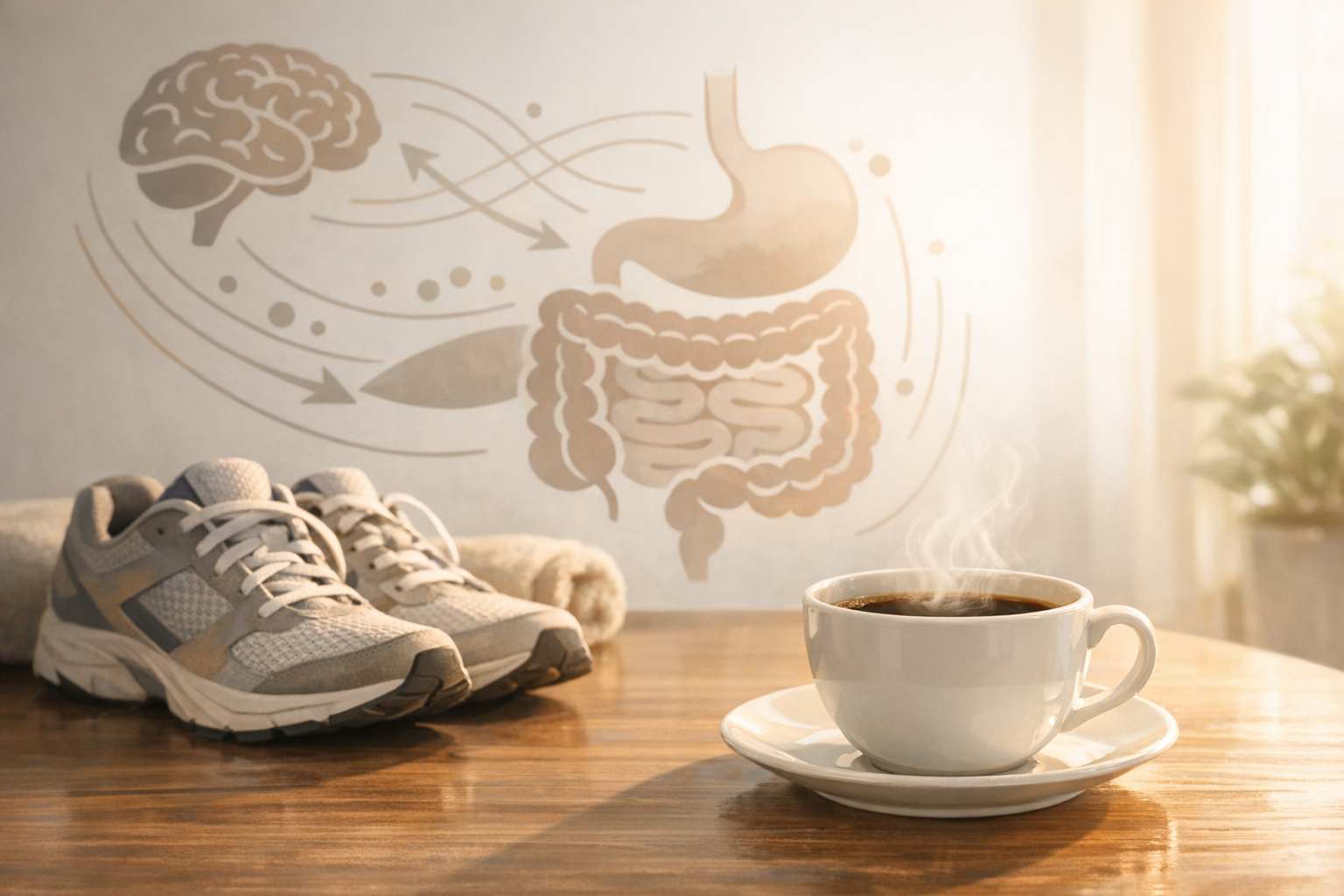
A new study in Nature Communications adds to growing interest in the gut–brain axis: the idea that microbes in the digestive tract, their chemical byproducts, and the nervous system communicate in ways that may relate to mood, stress, attention, and cognition.
The study was not conducted in Schaumburg or Illinois, and it does not create a local public health recommendation. Still, it may interest readers who track how daily habits—including coffee, sleep, stress management, nutrition, and exercise—fit together.
What Researchers Studied
Researchers compared habitual coffee drinkers with people who did not drink coffee, with about 31 participants in each group. Participants went through a 14-day coffee abstinence period, followed by a 21-day reintroduction phase using either decaffeinated or caffeinated coffee.
The research team analyzed gut microbiome patterns using shotgun metagenomics, measured microbial metabolites, and assessed cognitive and mood-related outcomes. The goal was to see whether coffee was linked with changes in gut microbes and whether those changes tracked with physiology and brain-related measures.
What The Study Found
The investigators reported that habitual coffee drinkers had different gut microbiome profiles than non-drinkers. They also found changes in certain microbial metabolites and links between coffee-related microbiome patterns and measures involving cognition and mood.
Some effects appeared to shift during abstinence and reappear or change after coffee was reintroduced. Because the study included both caffeinated and decaffeinated coffee, the findings suggest that caffeine may not explain every observed effect. Coffee contains many compounds beyond caffeine, and the study was designed to explore that broader picture.
Why This Matters For Active Readers
For people interested in exercise and wellness, the main message is not that coffee improves workouts. This study did not test strength, endurance, walking performance, yoga practice, or athletic recovery. Instead, it points to a possible connection among coffee intake, gut microbes, and brain-related measures such as mood, stress response, memory, and attention.
That distinction matters. Mood, focus, sleep, and stress can affect whether people feel able to maintain healthy routines, but this study does not prove that coffee causes better mental performance or better exercise habits. It is a research finding that helps scientists ask more precise questions.
What Is The Gut–Brain Axis?
The gut–brain axis is a two-way communication system involving the digestive tract, immune signaling, hormones, the nervous system, and microbial byproducts produced by gut bacteria. In plain language, the gut and brain are not isolated from each other. Changes in diet, stress, sleep, medications, illness, and other daily factors may influence this system.
Coffee is a useful research subject because it is widely consumed and contains caffeine plus many other plant compounds. Decaffeinated coffee allows researchers to ask whether some effects may be related to non-caffeine components.
Important Limits
- The study was relatively small. It included about 31 people in each comparison group.
- The findings are not the final word. Links among coffee intake, microbes, metabolites, and cognitive or mood measures do not prove a simple cause-and-effect relationship.
- The participants were healthy adults. Results may not apply to people with digestive disorders, sleep problems, anxiety disorders, pregnancy-related questions, heart conditions, or other medical concerns.
- The study was short-term. The abstinence and reintroduction phases showed change over weeks, but longer-term effects remain uncertain.
- Individual responses may differ. A person’s baseline microbiome, caffeine sensitivity, sleep pattern, stress level, and overall diet could matter.
Practical Questions To Ask A Health Professional
Readers do not need to change coffee habits based on one study. If coffee seems to affect how you feel, consider asking a doctor, pharmacist, dietitian, or another qualified provider questions such as:
- Could coffee or caffeine be contributing to sleep disruption, jitteriness, digestive discomfort, heart pounding, or feeling more anxious?
- Do any health conditions or medications make caffeine or coffee intake worth discussing?
- Would decaffeinated coffee be a reasonable option to consider if caffeine seems to be an issue?
- For an exercise routine, could the timing of coffee be affecting sleep, stress, or how the body feels during activity?
- If mood, stress, attention, or memory concerns are persistent or worsening, what evaluation would be appropriate?
The bottom line: this study strengthens scientific interest in how everyday beverages may interact with the microbiome and the brain. It does not show that coffee is a treatment, a performance enhancer, or a guaranteed wellness strategy.
Educational note: This article is for general educational purposes only and is not medical advice. Talk with your doctor or another qualified provider about your own health. In an emergency, call 911.
This article is an original summary based on information published by Nature Communications and ScienceDaily.
Sourcesnature.com s41467 026 71264 8sciencedaily.com 260927034331
More in Health & Wellness Mezzetta Peperoncini Recall: What Illinois Shoppers Should CheckOct 2, 2026 Ravioli Recall Highlights Hidden Shellfish Allergy RiskOct 2, 2026 Raw Milk Cheese Recall Linked To E. Coli InvestigationOct 2, 2026 Lior Cinnamon Recall Includes Illinois DistributionOct 2, 2026
Share this articleFacebookXLinkedIn
Explore SchaumburgEvents →Things to Do →Coupons →Classifieds →Jobs →Videos →


Keep reading
More local news and guides from Schaumburg Marketplace.