


Schaumburg Marketplace
Connecting Local Business
And Empowering Community
951 N Plum Grove Rd, Suite C
Schaumburg, IL 60173
◆ CONNECTING LOCAL BUSINESS · EMPOWERING COMMUNITY


Health & Wellness
Mouse Study Finds Fast Fat-Cell Response To Strength Training
A new animal study suggests resistance exercise may trigger fat-cell changes before weight loss appears, but the findings still need human confirmation.
October 9, 2026 · 4 min read
I'm a paragraph. I'm connected to your collection through a dataset. Click Preview to see my content. To update me, go to the Data Manager.
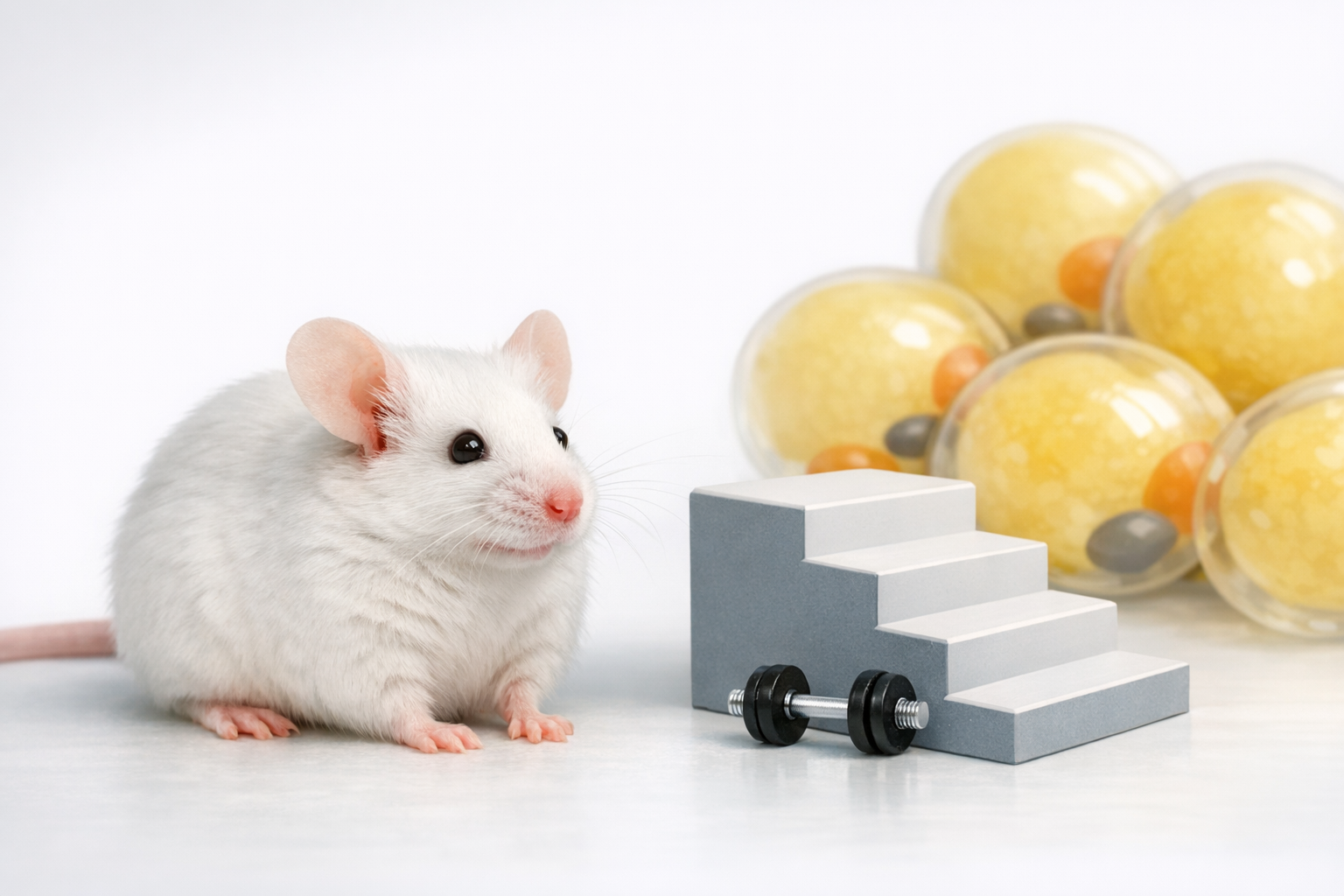
A new mouse study is adding detail to a question many people have when they begin strength training: can the body start changing before the scale moves?
According to a ScienceDaily summary of research published in Life Sciences, a Brazilian research team found that seven days of strength training in obese male Swiss mice was linked with smaller visceral fat cells and signs of increased fat breakdown in one abdominal fat depot. The mice had obesity induced by a high-fat diet.
The finding is interesting, but it is not proof that the same timeline or effect happens in people. This was an animal study, and the researchers noted that the results need confirmation in humans.
What The Study Looked At
The training protocol was designed for mice, not people. The animals completed seven sessions over seven days. During each session, they climbed a 70 cm staircase while carrying tail-attached weights at about 70% of their capacity. Each session included about 20 climbs, with 60 to 90 seconds of rest between climbs.
Researchers then examined mesenteric fat, a type of visceral fat tissue located in the abdomen. They reported smaller adipocytes, or fat cells, in the trained obese mice. They also observed activation of molecular markers involved in lipolysis, the process by which stored fat is broken down. The study focused on pathways including the ABHD5-ATGL axis and PLIN1 involvement.
One notable point: these changes appeared before overall weight loss was seen. That suggests, in this mouse model, some metabolic responses to resistance exercise may begin earlier than visible body-weight changes.
Why This Matters
For readers in Schaumburg, Illinois, and across the United States, the main takeaway is not that a one-week gym plan will shrink human fat cells. The more careful message is that exercise research continues to show that the body can respond internally in ways that are not always captured by weight alone.
Strength training, also called resistance training, generally means working muscles against resistance. That resistance can come from body weight, bands, machines, or free weights. In everyday terms, it asks muscles to produce force, and the body responds by adjusting muscle, nerve, and metabolic systems over time.
Visceral fat is different from the fat just under the skin. It sits deeper in the abdomen around internal organs. Scientists study it because it is closely tied to metabolic health, but this particular study measured a specific visceral fat depot in mice. That makes it important to avoid overgeneralizing the results to all people or all body fat.
What The Evidence Can And Cannot Say
The evidence shows that, in obese male Swiss mice, a short resistance-training protocol was associated with measurable changes in abdominal fat tissue after seven days. It also supports a broader research direction from the same group, including a related PubMed-indexed study on rapid epigenetic changes in visceral adipose tissue after seven days of strength training in obese Swiss mice.
However, several limits are important:
- It was not a human study. Mouse biology can provide clues, but it cannot tell us exactly what will happen in adults, children, older adults, or people with specific medical conditions.
- The protocol was highly controlled. Stair climbing with tail-attached weights is a laboratory model, not a typical community exercise routine.
- The tissue studied was specific. The researchers examined mesenteric visceral fat, so the findings may not apply to every fat depot.
- Health outcomes were not settled. The molecular changes are meaningful for research, but they do not by themselves prove long-term benefits in humans.
Practical Context For Readers
People often judge early exercise progress by body weight, but body weight is only one measure. In research settings, scientists can look at molecular markers, fat-cell size, and tissue-level activity that are not visible at home. This study highlights why early changes may be difficult to see without laboratory tools.
Anyone considering a new exercise routine, especially if they have a heart condition, blood pressure concerns, diabetes, joint problems, a history of dizziness or fainting, or other medical issues, can ask a doctor or qualified health professional practical questions such as:
- What types of strength exercise are appropriate for my current health status?
- Are there movements I should avoid or modify?
- What warning signs during activity should prompt me to stop and seek help?
- How should progress be monitored beyond body weight?
Warning signs during physical activity can include chest pain, fainting, severe shortness of breath, or sudden weakness. In an emergency, call 911.
The Bottom Line
This study offers an early, animal-based look at how quickly resistance exercise may affect fat-cell biology. It does not prove that the same changes happen in people after one week, but it reinforces an important concept: the body may begin adapting internally before weight loss is noticeable.
This article is for general educational purposes only and is not medical advice. Readers should talk with their doctor or another qualified provider about their own health. In an emergency, call 911.
This article is an original summary based on information published by ScienceDaily, Life Sciences, and PubMed.
Sourcessciencedaily.com 261006234509doi.org j.lfs.2026.124546pubmed.ncbi.nlm.nih.gov 41334763
More in Health & Wellness HIIT Study Points to Muscle Preservation in Older AdultsOct 9, 2026 Mezzetta Peperoncini Recall: What Illinois Shoppers Should CheckOct 2, 2026 Ravioli Recall Highlights Hidden Shellfish Allergy RiskOct 2, 2026 Raw Milk Cheese Recall Linked To E. Coli InvestigationOct 2, 2026
Share this articleFacebookXLinkedIn
Explore SchaumburgEvents →Things to Do →Coupons →Classifieds →Jobs →Videos →


Keep reading
More local news and guides from Schaumburg Marketplace.