


Schaumburg Marketplace
Connecting Local Business
And Empowering Community
951 N Plum Grove Rd, Suite C
Schaumburg, IL 60173
◆ CONNECTING LOCAL BUSINESS · EMPOWERING COMMUNITY


Health & Wellness
Sugar Substitute Study Raises Fructose Metabolism Questions
New research summarized by ScienceDaily and Washington University suggests a common sugar substitute may be converted through the gut and liver into fructose, raising questions about metabolism and disease risk.
September 25, 2026 · 3 min read
I'm a paragraph. I'm connected to your collection through a dataset. Click Preview to see my content. To update me, go to the Data Manager.
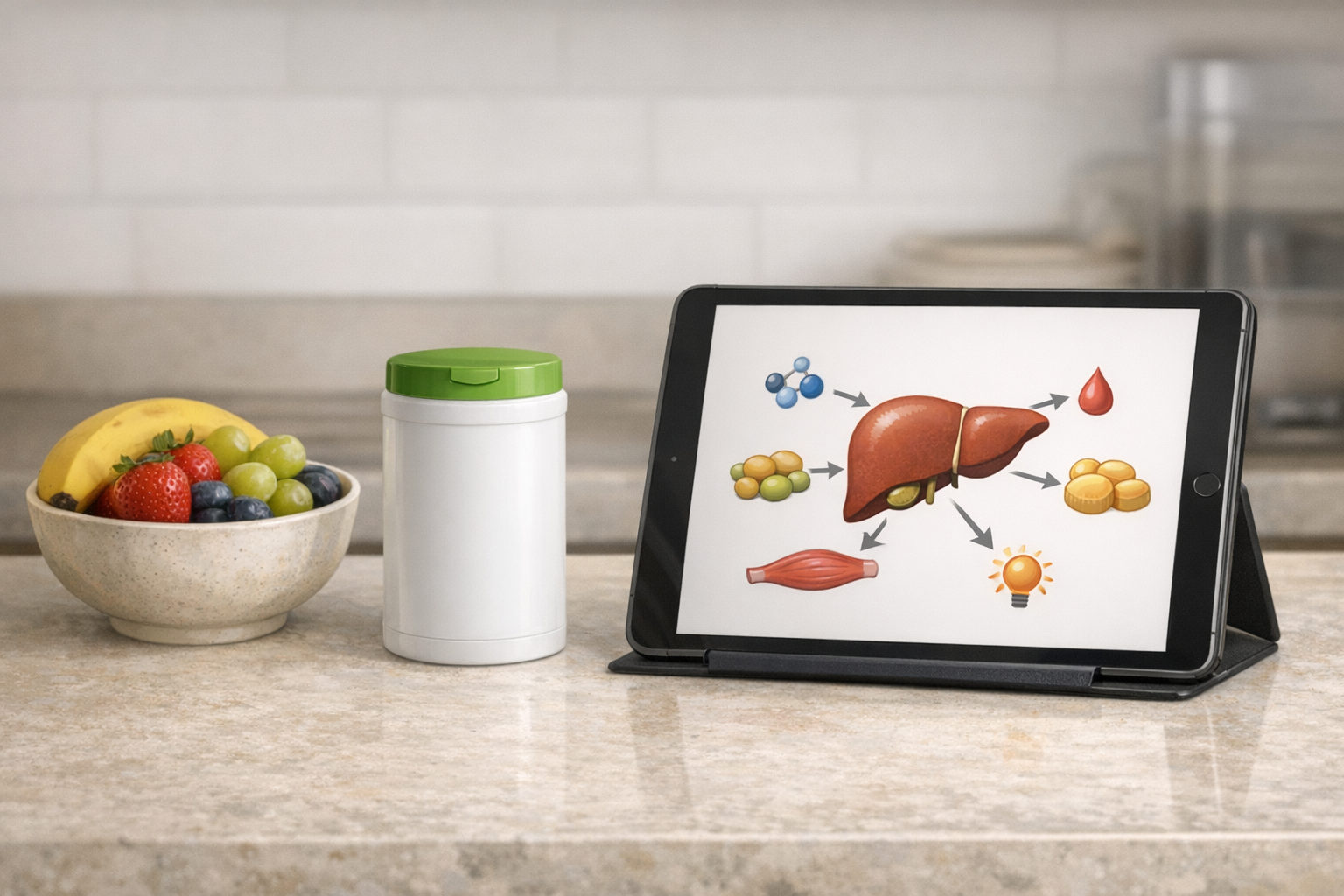
A new research summary is drawing attention to an overlooked question in diet science: what happens after a sugar substitute is broken down inside the body?
ScienceDaily reported in September 2026 on Science Signaling work connected to Washington University in St. Louis researcher Gary Patti and colleagues. The central finding described in the report is that a common sugar substitute can be metabolized through the gut and ultimately show up as fructose in the liver. That matters because Patti’s broader research program has examined how fructose metabolism can influence disease-related biology, including cancer cell behavior in model systems.
What The Research Found
The reported work focuses on metabolism, not taste or calorie counts alone. According to the research summaries, the sweetener may take a route through the digestive system that results in fructose reaching the liver. Washington University materials describe related work showing that dietary fructose can affect tumor growth indirectly through interorgan lipid transfer in experimental systems.
In plain language, the body does not always handle a sweet-tasting ingredient in a simple, one-step way. Gut microbes, the intestine, the liver, and other tissues can transform nutrients and sweeteners into different molecules. Those downstream molecules may have biological effects that are not obvious from the ingredient label.
Why Fructose Metabolism Gets Attention
Fructose is a type of sugar that is processed heavily by the liver. In the research described by Washington University, fructose did not simply feed cancer cells directly in the way many people might assume. Instead, the work points to a more indirect pathway involving the liver and lipid movement between organs.
That does not mean this study proves that a sugar substitute causes cancer or liver disease in people. The available summaries describe mechanistic research and model-system findings. These studies can reveal important biological pathways, but they do not by themselves establish the size of risk for the general public, which groups may be most affected, or what amount of exposure would be clinically important.
What This Means For Consumers
For readers in Schaumburg, Illinois, and across the United States, the practical takeaway is not panic. It is a reminder that “sugar-free” or “reduced sugar” does not always mean metabolically inactive. Sugar substitutes can differ from one another, and the body may process them in ways that researchers are still working to understand.
This is especially relevant to people who pay close attention to diet for medical reasons, such as those managing blood sugar, liver health, weight-related concerns, or cancer care. However, decisions about diet changes should be made with a qualified health professional who understands a person’s full health history.
Useful Questions To Ask A Health Professional
- For diabetes or blood sugar management: Which sweeteners fit my overall eating plan, and how should I read ingredient labels?
- For liver health concerns: Are there specific added sugars or sugar substitutes I should discuss based on my health history?
- For cancer care or survivorship: Are there nutrition recommendations from my oncology or dietetics team that apply to my treatment or recovery?
- For general healthy eating: How can I reduce reliance on very sweet foods and drinks without making unsafe or unrealistic diet changes?
Key Limits And Unanswered Questions
The main uncertainty is how these mechanistic findings translate to everyday human diets. The research summaries do not establish a population-wide risk level, a safe or unsafe amount, or a clinical guideline telling people to avoid a specific sweetener. More research would be needed to clarify who may be most affected, how gut metabolism varies among people, and whether the pathway meaningfully changes disease risk in real-world settings.
The strongest conclusion for now is that metabolism is more complex than a nutrition label can show. The study adds to scientific interest in how the gut and liver transform sweeteners and sugars, and why those transformations may matter for long-term health research.
Educational note: This article is for general educational purposes only and is not medical advice. Readers should talk with their doctor, registered dietitian, pharmacist, or another qualified provider about their own health and nutrition questions. In an emergency, call 911.
This article is an original summary based on information published by ScienceDaily, Science Signaling, and Washington University in St. Louis.
Sourcessciencedaily.com 260903064251source.washu.edu research reveals how fructose in diet enhances tumor growthsource.washu.edu alternative sweetener sorbitol linked to liver diseasesource.washu.edu targeting tumor metabolism to fight cancerprofiles.wustl.edu gary patti
More in Health & Wellness Mezzetta Peperoncini Recall: What Illinois Shoppers Should CheckOct 2, 2026 Ravioli Recall Highlights Hidden Shellfish Allergy RiskOct 2, 2026 Raw Milk Cheese Recall Linked To E. Coli InvestigationOct 2, 2026 Lior Cinnamon Recall Includes Illinois DistributionOct 2, 2026
Share this articleFacebookXLinkedIn
Explore SchaumburgEvents →Things to Do →Coupons →Classifieds →Jobs →Videos →


Keep reading
More local news and guides from Schaumburg Marketplace.