


Schaumburg Marketplace
Connecting Local Business
And Empowering Community
951 N Plum Grove Rd, Suite C
Schaumburg, IL 60173
◆ CONNECTING LOCAL BUSINESS · EMPOWERING COMMUNITY


Consumer Protection
Open Enrollment Brings a Fresh Warning on Health Insurance Scams
Federal and Illinois officials urge consumers to use official enrollment channels and free state help as scammers target health insurance shoppers during Open Enrollment.
October 2, 2026 · 3 min read
I'm a paragraph. I'm connected to your collection through a dataset. Click Preview to see my content. To update me, go to the Data Manager.
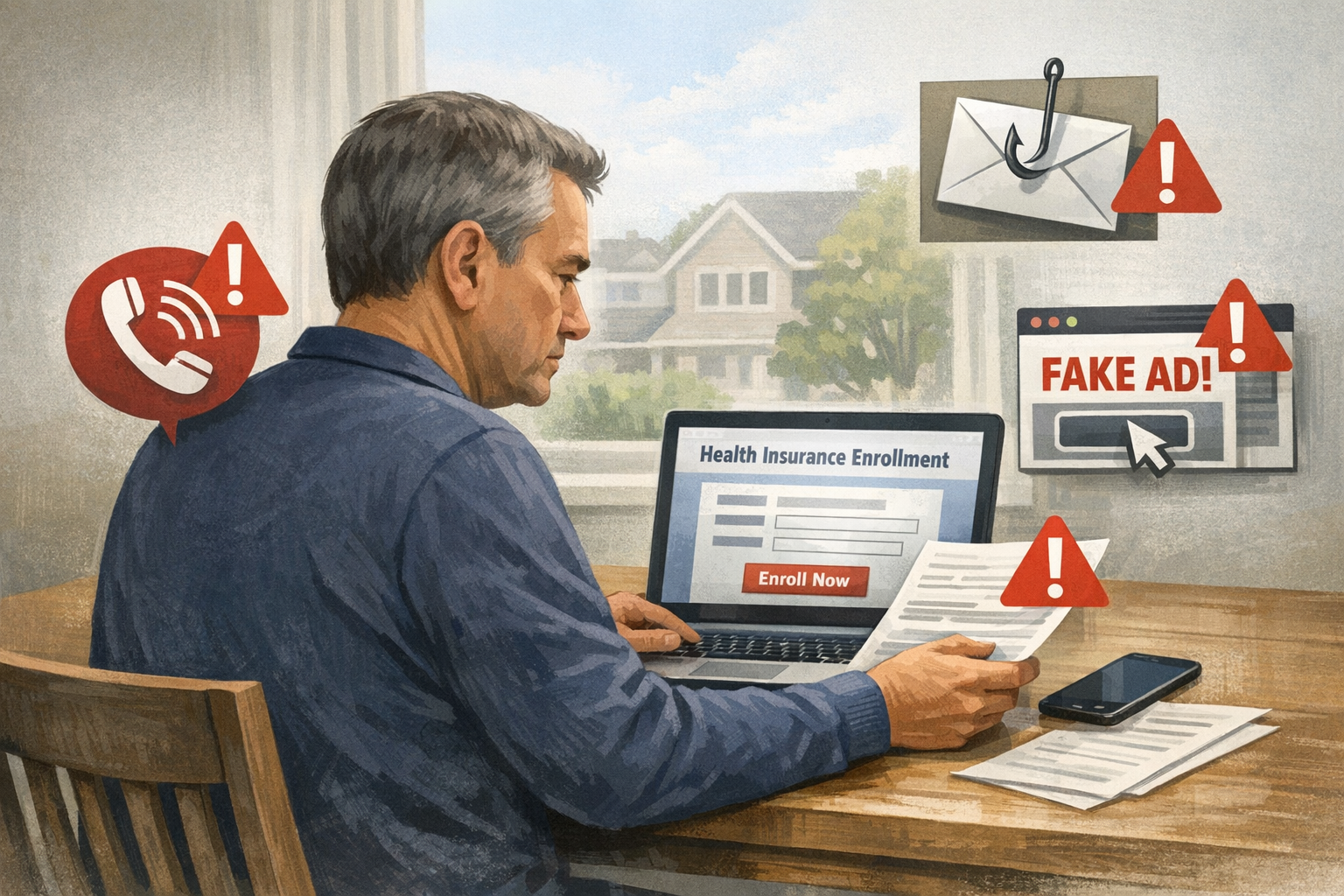
As the annual health insurance Open Enrollment season approaches, federal consumer protection officials are again warning that scammers often use the deadline-driven period to pressure people into sharing personal information, paying unnecessary fees, or signing up for products that may not be real health insurance.
The Federal Trade Commission, along with federal health agencies, has highlighted Open Enrollment as a period when consumers may see misleading calls, texts, emails, websites, social media ads, or sales pitches tied to Medicare or the Health Insurance Marketplace. In Illinois, Get Covered Illinois also points residents to free enrollment help and scam-avoidance information.
What happened
The FTC issued a consumer alert ahead of Open Enrollment, emphasizing that fraudsters may impersonate government agencies, claim a person must act immediately, or offer plans that sound official but are not comprehensive insurance. HealthCare.gov and the Centers for Medicare & Medicaid Services also maintain fraud-prevention resources for Marketplace enrollment.
For Schaumburg and other Illinois readers, there is no verified Schaumburg-specific scam count in the reviewed sources. The most relevant local resource is Get Covered Illinois, the state’s official health coverage assistance program, which connects residents with free help and warns against suspicious enrollment offers.
Why it matters
Health coverage decisions can affect access to care, monthly costs, prescription coverage, deductibles, provider networks, and out-of-pocket limits. Scammers know that Open Enrollment creates urgency. They may use that urgency to collect Social Security numbers, Medicare numbers, banking details, credit card information, or application credentials.
A common risk is confusing a legitimate Marketplace plan with a limited-benefit product, discount card, or fake plan. Real insurance generally has clear plan documents, covered benefits, premiums, deductibles, copayments or coinsurance, and an official enrollment process. A sales pitch that avoids details, demands immediate payment, or refuses to provide written information should raise caution.
What the official guidance shows
The verified federal and state guidance points to several recurring warning signs:
- Someone contacts you unexpectedly and says they are from Medicare, the Marketplace, CMS, or another government agency.
- You are told you must pay a fee to get enrollment help. Illinois and federal resources direct consumers to free assistance options.
- A caller or website asks for sensitive personal or financial information before you have verified who they are.
- An ad promises unusually broad coverage, extremely low costs, or guaranteed savings without explaining plan limits.
- You are pressured to decide immediately or warned that you will lose benefits unless you act through that caller or website.
HealthCare.gov advises consumers to use official Marketplace channels and to be careful with online ads and unofficial websites. The FTC advises people to verify claims, use trusted contact information, and report suspected scams.
Illinois and Schaumburg consumer checklist
Before entering personal information or making a payment, consumers can ask practical questions:
- Am I on an official government website, such as HealthCare.gov or a state resource linked through Get Covered Illinois?
- Is this person offering free enrollment help, or are they asking for an upfront fee?
- Can I verify the agent, assister, plan name, and enrollment method through official sources?
- Does the plan explain premiums, deductibles, copays, covered services, drug coverage, and provider networks in writing?
- Is the product actual health insurance, or is it a discount card, short-term product, or limited-benefit arrangement?
- Am I being rushed, threatened, or asked to keep the conversation secret?
If something feels off, pause. Use contact information found directly on official websites rather than phone numbers or links in unsolicited messages.
How to report concerns
Consumers who suspect a health insurance scam can report it to the FTC at ReportFraud.ftc.gov. Marketplace-related concerns can also be checked through HealthCare.gov resources. Illinois residents can use Get Covered Illinois to find free local assistance and state-specific guidance.
The main uncertainty is local scale: the reviewed sources do not identify how many Schaumburg or Illinois residents have been targeted in the current enrollment cycle. But the federal and state warnings show that Open Enrollment remains a predictable opportunity for fraud attempts nationwide.
Educational note: This article is for general consumer education only and is not personalized financial, insurance, tax, medical, or legal advice. Coverage needs and eligibility vary, so readers should verify information through official sources or qualified enrollment assistance.
Sourcesconsumer.ftc.gov what know ahead open enrollment avoid health insurance scamsconsumer.ftc.gov spot health insurance scamshealthcare.gov protect from fraud and scamsgetcovered.illinois.gov avoid health insurance scamscms.gov federal marketplace ffe sbe fp anti fraud actionscms.gov noticesapnews.com c0994d92a726f4e068112d3bb6340d03healthcare.gov
Latest articles Safe GenAI Starts Before the Prompt: The Invisible Shield Every Enterprise NeedsOct 22, 2026 The window to lead the AI transition is closing. Growth Leaders act now.Oct 16, 2026 Late-Night Eating Tied To Liver Disease Risk In U.S. StudyOct 16, 2026 Tax-Free Municipal Bond Fund Lists: What Illinois Investors Should CheckOct 16, 2026
Share this articleFacebookXLinkedIn
Explore SchaumburgEvents →Things to Do →Coupons →Classifieds →Jobs →Videos →
SPONSORED

Business Name
Service • Service
Short description of the business.
Licensed

Paid placement. We don't endorse this business. Please verify licenses before hiring.
Keep reading
More local news and guides from Schaumburg Marketplace.