


Schaumburg Marketplace
Connecting Local Business
And Empowering Community
951 N Plum Grove Rd, Suite C
Schaumburg, IL 60173
◆ CONNECTING LOCAL BUSINESS · EMPOWERING COMMUNITY


Health & Wellness
Kimchi-Derived Bacterium Shows Early Nanoplastic Binding Promise
A lab and mouse study found that a kimchi-derived lactic acid bacterium could bind polystyrene nanoplastics in simulated gut conditions, but human benefits are not yet proven.
September 29, 2026 · 3 min read
I'm a paragraph. I'm connected to your collection through a dataset. Click Preview to see my content. To update me, go to the Data Manager.
What Happened
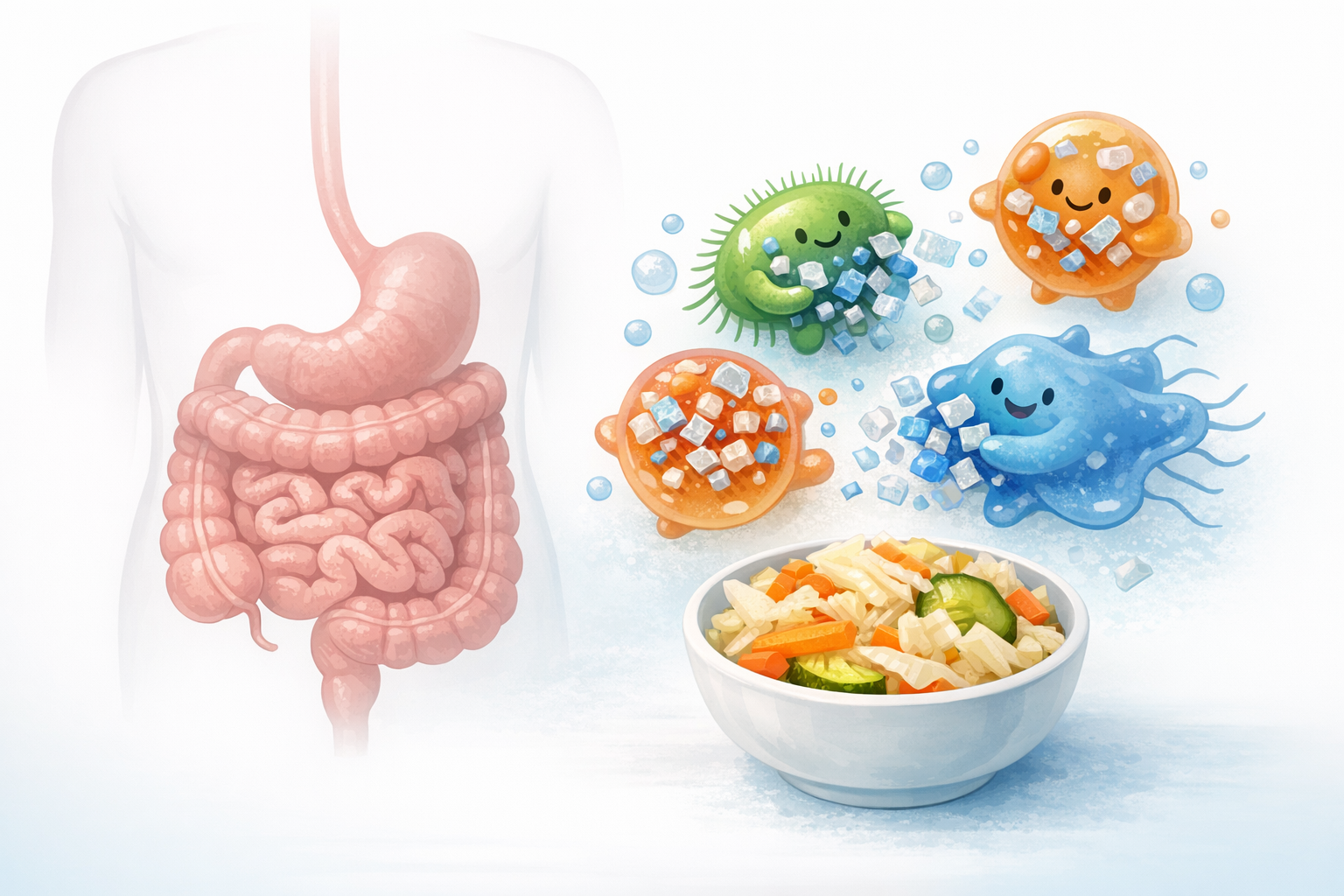
A new study in Bioresource Technology examined whether a food-derived lactic acid bacterium from kimchi could bind tiny plastic particles in the gut. The strain, Leuconostoc mesenteroides CBA3656, was tested against polystyrene nanoplastics, a type of plastic particle small enough to be studied at the nanoscale.
Under standard laboratory conditions, the bacterium showed 87% adsorption of polystyrene nanoplastics. Under simulated human intestinal conditions, it maintained about 57% adsorption, while a comparison strain showed 3% under those simulated gut conditions. In germ-free mice, administration of CBA3656 was linked with more than a twofold increase in nanoplastics detected in feces compared with controls.
The findings are scientifically interesting, but they are early. The work included laboratory testing and a mouse model, not a human clinical trial.
Why It Matters
Microplastics and nanoplastics are being studied because small plastic particles have been detected in different human tissues, and researchers are still working to understand what that means for health. Measurement methods vary, and scientists have not yet settled many practical questions about exposure, accumulation, or removal from the body.
For readers in Schaumburg and across Illinois, the takeaway is not that kimchi or probiotic products have been proven to remove nanoplastics in people. The useful point is narrower: researchers are exploring whether certain food-derived bacteria can physically bind nanoplastics in the gut and help move them out through feces.
What The Evidence Shows
- The tested bacterium came from kimchi: The study focused on one specific strain, Leuconostoc mesenteroides CBA3656, not kimchi as a whole.
- The target particle was specific: Researchers tested polystyrene nanoplastics, so the results should not be assumed to apply to every type, size, or shape of plastic particle.
- The gut simulation mattered: CBA3656 retained about 57% adsorption under simulated intestinal conditions, while the comparison strain dropped to 3%.
- The animal data were supportive but limited: Germ-free mice given CBA3656 had more than twice as much fecal nanoplastic detection as controls, suggesting increased excretion in that model.
What Is Still Uncertain
This research does not show that eating kimchi, taking a probiotic supplement, or changing diet will clear nanoplastics from the human body. The studied strain may not be present in all fermented foods or commercial products, and the dose, safety, duration, and effectiveness in people have not been established by the cited study.
Another important limit is that germ-free mice do not have the same gut microbiome as people living their usual lives. Human intestines contain complex communities of microbes, and those communities vary from person to person. That could affect whether a bacterium survives, attaches to particles, or changes excretion.
Plain-Language Nutrition Context
Probiotics are live microorganisms studied for potential health effects. Fermented foods may contain live microbes, but different foods, batches, and products can contain different organisms. A finding about one named bacterial strain should not be generalized to all fermented foods or all probiotic supplements.
If you are curious about probiotics, practical questions to ask a doctor, pharmacist, or other qualified provider include: Is this product appropriate for my health history? Is the exact strain listed? What evidence exists in humans? Could it interact with my medical conditions or medicines? People with significant medical conditions should be especially careful about assuming that a supplement or fermented food is risk-free.
There are no established personal warning signs that tell someone they have nanoplastic buildup. For digestive symptoms such as persistent abdominal pain, ongoing diarrhea, blood in stool, unexplained weight loss, or symptoms that are new or worsening, it is best to seek medical evaluation rather than trying to self-treat based on early research.
The Bottom Line
The study points to a possible future strategy: using carefully selected food-derived bacteria to bind nanoplastics in the gut. But for now, it remains an early-stage finding from lab testing and germ-free mice. Human studies would be needed before anyone can say whether this approach works, for whom, and under what conditions.
General education note: This article is for general educational purposes only and is not medical advice. Talk with your doctor or another qualified provider about your own health, diet, supplements, medications, and symptoms. In an emergency, call 911.
This article is an original summary based on information published by Bioresource Technology, ScienceDaily, Phys.org, and NIH/PMC background research.
Sourcesdoi.org j.biortech.2026.134234sciencedaily.com 260917101058phys.org 2026 03 kimchi derived probiotic excretion intestinalpmc.ncbi.nlm.nih.gov PMC13351226
More in Health & Wellness Late-Night Eating Tied To Liver Disease Risk In U.S. StudyOct 16, 2026 Mouse Study Finds Fast Fat-Cell Response To Strength TrainingOct 9, 2026 HIIT Study Points to Muscle Preservation in Older AdultsOct 9, 2026 Mezzetta Peperoncini Recall: What Illinois Shoppers Should CheckOct 2, 2026
Share this articleFacebookXLinkedIn
Explore SchaumburgEvents →Things to Do →Coupons →Classifieds →Jobs →Videos →

Keep reading
More local news and guides from Schaumburg Marketplace.