


Schaumburg Marketplace
Connecting Local Business
And Empowering Community
951 N Plum Grove Rd, Suite C
Schaumburg, IL 60173
◆ CONNECTING LOCAL BUSINESS · EMPOWERING COMMUNITY


Health & Wellness
High Blood Sugar And Cancer Immune Evasion: What Study Found
A new lab-based study suggests high glucose may help some cancer cells build a thicker sugar coating that makes immune detection harder. The finding is early and not a diet prescription.
September 25, 2026 · 4 min read
I'm a paragraph. I'm connected to your collection through a dataset. Click Preview to see my content. To update me, go to the Data Manager.
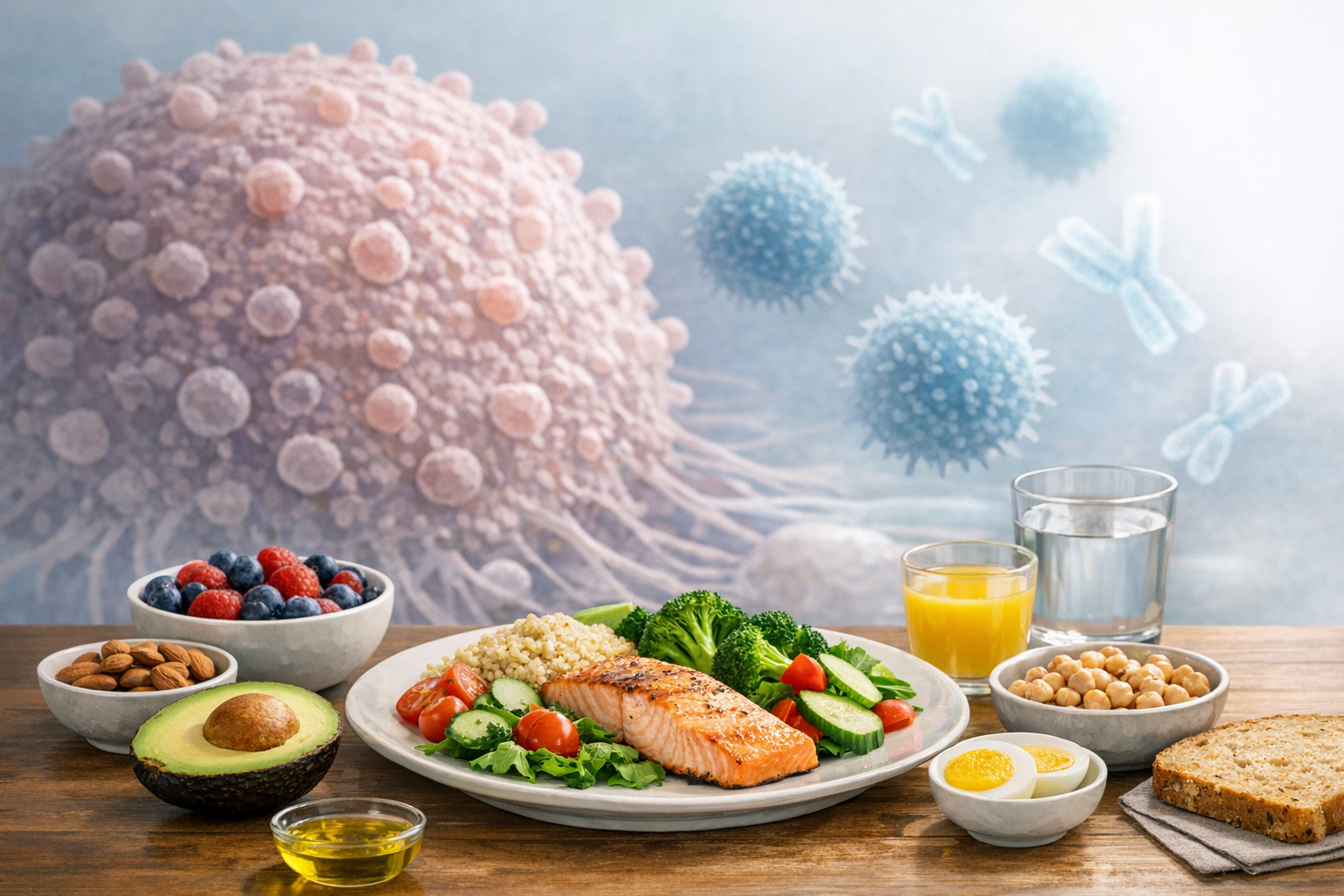
A peer-reviewed study published in Science Advances on August 7, 2026, adds a new clue to a complex question: how might a high-glucose environment affect the way cancer cells interact with the immune system?
The research found that elevated glucose, under tumor-like microenvironment conditions, can help cancer cells thicken a sugar-rich outer layer called the glycocalyx. That thicker coating may make it harder for immune cells, including natural killer cells, to recognize and respond to cancer cells. The work points to a pathway involving Heat Shock Factor 1, or HSF1, as part of the process.
For readers in Schaumburg and across Illinois, the takeaway is not that diet alone determines cancer outcomes. The finding is an early mechanistic study, not a clinical trial in patients. But it does highlight why scientists are increasingly interested in the links among metabolism, blood sugar, immune function and cancer treatment response.
What The Researchers Studied
The study used cell-culture systems and experimental models designed to mimic aspects of the tumor microenvironment. Researchers looked at how glucose conditions and surrounding physical and biological cues affected cancer cell surfaces.
One important finding was that high glucose by itself was not described as the whole story. The tumor-like microenvironment mattered. Under those conditions, hyperglycemia appeared to change metabolism through HSF1 and increase the thickness and makeup of the glycocalyx.
In plain language, the glycocalyx is a sugar-containing layer on the outside of cells. All cells have surface structures that help them communicate with their surroundings. In cancer, changes to that outer layer may influence whether immune cells can identify a dangerous cell clearly.
Why This Matters
Modern cancer care increasingly relies on the immune system, including treatments that aim to help immune cells detect and attack cancer. If a thickened glycocalyx acts like a shield, understanding how it forms could eventually help researchers develop ways to improve immune recognition.
The study authors and later summaries noted that targeting HSF1-related metabolism or glycocalyx-building pathways could be a future research direction. However, that does not mean there is an approved treatment based on this finding, or that changing diet has been proven to change immunotherapy results through this mechanism.
What This Does And Does Not Say About Diet
Because this story involves glucose, it may sound like a simple diet message. It is not. Blood sugar is influenced by many factors, including health conditions, medications, meals, activity, stress, sleep and illness. Cancer biology is also highly variable, and the study was not designed to test diets in people with cancer.
What the study does support is a more careful scientific question: in some tumor settings, could high-glucose conditions help cancer cells avoid immune detection? The answer from this lab-based work is that the mechanism is plausible and worth further study.
People with diabetes, prediabetes, metabolic syndrome or cancer may have especially practical questions for their care teams, but the study should not be used to make personal changes without medical guidance.
High Blood Sugar: General Signs To Know
High blood sugar can sometimes occur without obvious symptoms. When symptoms are present, they may include increased thirst, frequent urination, fatigue or blurred vision. These symptoms can have many causes, so they should be discussed with a qualified health professional rather than self-diagnosed.
Useful questions for a doctor, pharmacist, dietitian or oncology team may include:
- How should my blood sugar be monitored based on my health history?
- Could any of my medications or health conditions affect glucose levels?
- If I am receiving cancer treatment, should glucose control be part of my care discussion?
- Are there nutrition goals that fit my diagnosis, treatment plan and overall health?
- What symptoms should prompt me to seek medical care?
Main Limits And Uncertainties
The biggest limitation is that this was not a human outcomes trial. The findings came from multi-omics work and cell-based models that simulated tumor physiology. That is valuable for discovering mechanisms, but it cannot prove that lowering blood sugar, changing diet or targeting HSF1 will improve outcomes for patients.
Future research would need to test whether this pathway affects real-world cancer progression or immunotherapy response in people, and whether any intervention can safely change it. Glucose metabolism is essential throughout the body, so any future treatment strategy would need careful safety testing.
Bottom line: the study suggests that high-glucose conditions may help some cancer cells build a thicker sugar coating that interferes with immune surveillance. It is an important research clue, not a personal diet rule or treatment recommendation.
This article is for general educational purposes only and is not medical advice. Readers should talk with their doctor or another qualified provider about their own health. In an emergency, call 911.
This article is an original summary based on information published by Science Advances, PubMed, ScienceDaily and MedlinePlus.
Sourcespmc.ncbi.nlm.nih.gov PMC13450322pubmed.ncbi.nlm.nih.gov 42566549sciencedaily.com 260829235950medlineplus.gov highbloodsugar
More in Health & Wellness Mezzetta Peperoncini Recall: What Illinois Shoppers Should CheckOct 2, 2026 Ravioli Recall Highlights Hidden Shellfish Allergy RiskOct 2, 2026 Raw Milk Cheese Recall Linked To E. Coli InvestigationOct 2, 2026 Lior Cinnamon Recall Includes Illinois DistributionOct 2, 2026
Share this articleFacebookXLinkedIn
Explore SchaumburgEvents →Things to Do →Coupons →Classifieds →Jobs →Videos →


Keep reading
More local news and guides from Schaumburg Marketplace.