


Schaumburg Marketplace
Connecting Local Business
And Empowering Community
951 N Plum Grove Rd, Suite C
Schaumburg, IL 60173
◆ CONNECTING LOCAL BUSINESS · EMPOWERING COMMUNITY


Consumer Protection
FTC warns car shoppers about fake dealership websites
The FTC says scammers are cloning dealership websites to capture payments and personal information. Here is what Illinois car shoppers should check before buying online.
September 18, 2026 · 3 min read
I'm a paragraph. I'm connected to your collection through a dataset. Click Preview to see my content. To update me, go to the Data Manager.
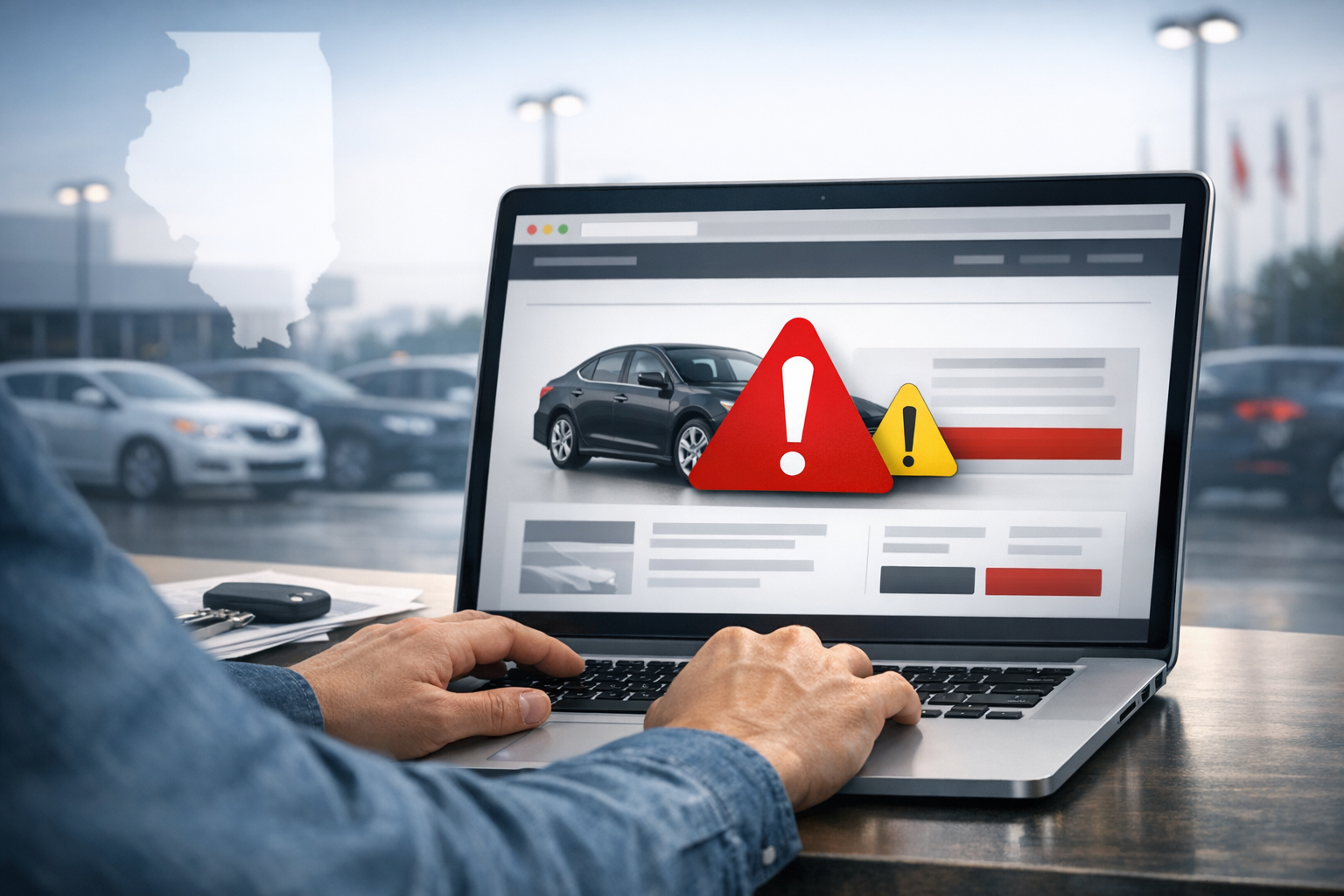
The Federal Trade Commission is warning consumers about a car-buying scam that can look convincing at first glance: fake websites that impersonate real auto dealerships.
In a Sept. 1, 2026 consumer alert, the FTC said scammers are copying dealer names, logos, vehicle photos and online listings to make fraudulent sites appear legitimate. The goal is to push shoppers into submitting payment information, deposits or personal details through a website the real dealership does not control.
Why it matters for Illinois car shoppers
No Schaumburg-specific spoofed dealership case was identified in the cited records. Still, the warning is relevant for readers in Schaumburg, the Chicago suburbs and across Illinois because many buyers now begin a vehicle purchase online, compare inventory across multiple dealerships and may communicate by email, text or web forms before visiting a showroom.
Illinois also has a recent consumer-protection backdrop involving auto sales. Federal and state authorities have brought separate enforcement actions involving alleged deceptive dealer practices, including issues such as junk fees and misrepresentations. Those cases are not the same as the fake-website scam, but they underscore why shoppers should slow down and verify pricing, identity and payment instructions before handing over money or sensitive information.
How the dealership spoofing scam works
According to the FTC, the scam typically starts with a site that looks like a real dealer’s page. It may display familiar branding, copied vehicle listings and photos, and contact forms that seem ordinary. A shopper who believes the site is legitimate may be asked to make a payment, reserve a vehicle, submit identifying information or continue the transaction away from verified dealership channels.
The risk is twofold. First, money sent to a scammer may be difficult or impossible to recover, especially if it is sent through a payment method with limited consumer protections. Second, personal information submitted on a fake site can be used for identity theft or other fraud.
What consumers can check before paying
The FTC recommends independently verifying a dealership before entering payment or personal information. Practical steps include searching the dealership name along with words such as “scam,” “review” or “complaint,” and using verified contact information rather than relying only on a link in an ad, email or message.
Shoppers can also compare the web address carefully, look for odd spelling or unfamiliar domain names, and call the dealership using a phone number found through a trusted source. If a seller pressures a buyer to act immediately, demands unusual payment methods or avoids normal documentation, those are warning signs to pause and verify.
Financial education note: payments, credit and personal data
This article is for general educational purposes only and is not personalized financial advice.
Vehicle purchases often involve deposits, down payments, financing applications, credit checks and personal documents. A fake dealer site may try to collect information such as a Social Security number, driver’s license details, bank information or credit application data. In legitimate auto financing, lenders and dealers may request sensitive information, but consumers should know who is receiving it and why before submitting it online.
Payment method matters. Credit cards may offer dispute rights in some situations, while wire transfers, cryptocurrency, gift cards and certain instant-payment methods can be much harder to reverse. A request to pay outside normal dealership procedures should be treated cautiously. Buyers should also ask what a deposit covers, whether it is refundable, what fees are included, and whether the total out-the-door price is in writing.
What the record shows and what remains uncertain
The FTC’s alert confirms the agency has identified spoofed car dealership websites as a current consumer threat. The cited public materials describe the scam mechanics and prevention steps, but they do not identify a Schaumburg victim, a specific local spoofed dealer or a victim count for Illinois in this alert.
The main uncertainty is how quickly the scam may evolve. Fraudsters can change domain names, copy new listings or shift to different communication channels. For that reason, one clean-looking website is not enough proof that a transaction is safe.
Consumers who believe they encountered a fake dealership website or lost money to this type of scam can report it to the FTC at ReportFraud.ftc.gov.
Sourcesconsumer.ftc.gov scammers are spoofing car dealership websites what you need knowconsumer.ftc.gov business impersonatorsconsumer.ftc.gov 202609consumer.ftc.gov scamsftc.gov ftc takes action against multistate auto dealer napleton…ftc.gov leader automotive group et al ftc state illinois v timeline…illinoisattorneygeneral.gov Leader%20Complaint
More in Consumer Protection Open Enrollment Brings a Fresh Warning on Health Insurance ScamsOct 2, 2026 FTC’s Take It Down Act Enforcement Gives Victims a 48-Hour Removal PathOct 2, 2026
Share this articleFacebookXLinkedIn
Explore SchaumburgEvents →Things to Do →Coupons →Classifieds →Jobs →Videos →
SPONSORED

Business Name
Service • Service
Short description of the business.
Licensed

Paid placement. We don't endorse this business. Please verify licenses before hiring.
Keep reading
More local news and guides from Schaumburg Marketplace.