


Schaumburg Marketplace
Connecting Local Business
And Empowering Community
951 N Plum Grove Rd, Suite C
Schaumburg, IL 60173
◆ CONNECTING LOCAL BUSINESS · EMPOWERING COMMUNITY


Economy
Fed’s September 2026 projections outline inflation, jobs and rate expectations
The Federal Reserve released its September 2026 economic projections, offering a national read on inflation, growth, unemployment and the expected policy-rate path.
September 23, 2026 · 4 min read
I'm a paragraph. I'm connected to your collection through a dataset. Click Preview to see my content. To update me, go to the Data Manager.
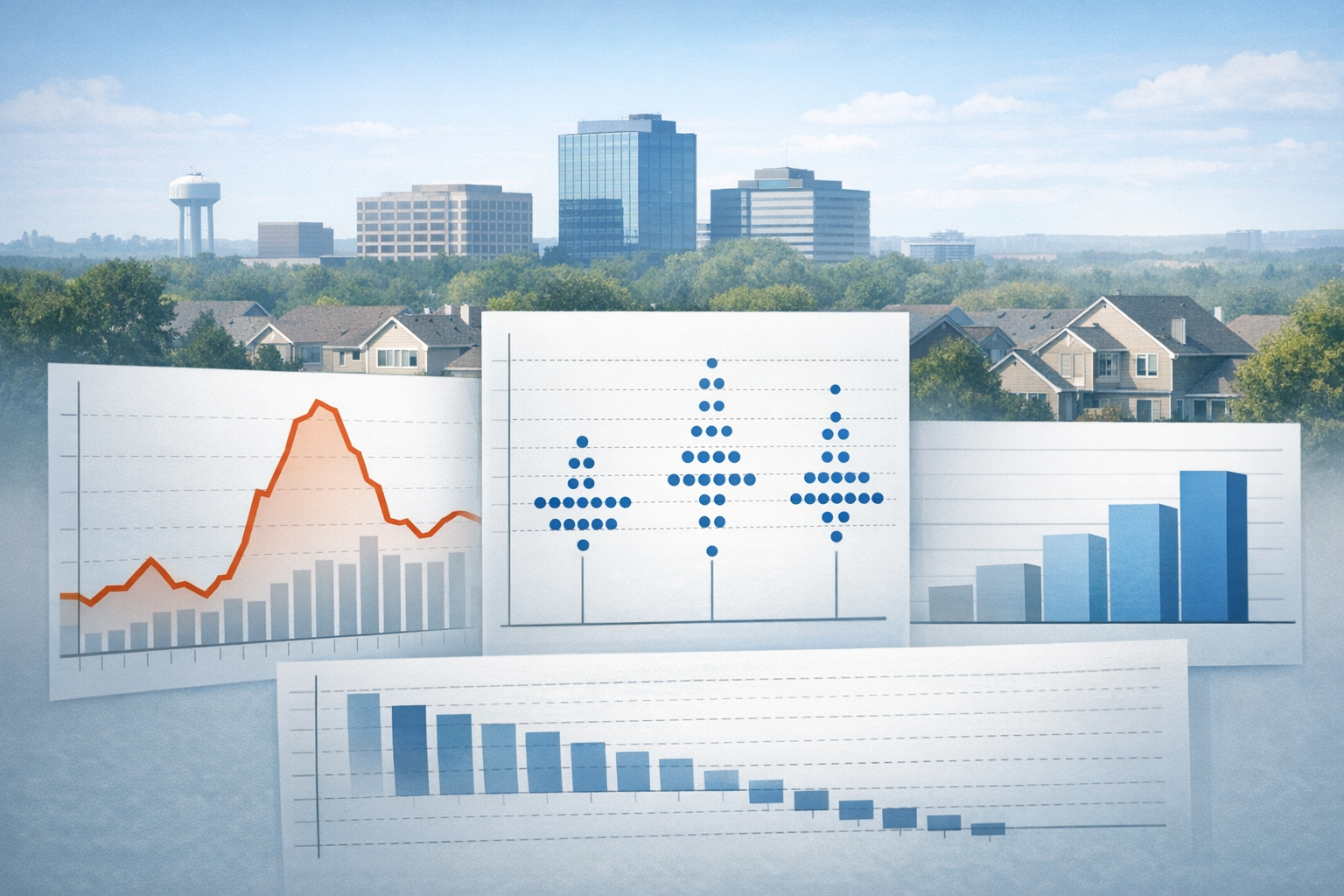
The Federal Reserve and the Federal Open Market Committee released their latest Summary of Economic Projections on Sept. 16, 2026, following the Sept. 15–16 FOMC meeting. The materials give the public a look at how Fed officials view the economy through 2029 and over the longer run.
The release is national in scope, but it matters for Schaumburg and Illinois readers because Fed expectations can shape borrowing costs, business planning and household budgets. The projections do not set mortgage, auto-loan or credit-card rates directly, but they influence financial markets that help determine those costs.
What the Fed released
The Summary of Economic Projections, often called the SEP, includes policymakers’ outlooks for real gross domestic product growth, the unemployment rate, inflation as measured by personal consumption expenditures, and the federal funds rate. The September 2026 tables cover projections for 2026, 2027, 2028, 2029 and the longer run.
The Fed released the projection materials at 2 p.m. Eastern time on Sept. 16, along with related meeting and press conference materials. The accessible projection tables are available on the Federal Reserve’s website.
Why the projections matter
The SEP is not a promise or a fixed plan. It is a snapshot of what Fed participants think could happen if the economy evolves as they expect and if monetary policy is set appropriately. Investors, lenders, businesses and consumers watch the SEP because it can clarify how policymakers are weighing inflation, employment and growth risks.
For households, the most visible connection is interest rates. The federal funds rate is a short-term policy rate that affects the cost of money across the economy. When expected policy rates are higher, many forms of borrowing can become more expensive. When expected policy rates decline, borrowing costs may ease, although not always immediately and not equally across loan types.
For Schaumburg-area residents, that can show up in mortgage quotes, home-equity borrowing, auto financing, credit-card annual percentage rates and small-business loans. Mortgage rates also depend on longer-term bond yields, lender pricing, inflation expectations and credit conditions, so they can move differently from the Fed’s policy rate.
What the data shows
The September SEP tables show Fed participants’ estimates for economic growth, unemployment, inflation and the appropriate path for the federal funds rate. The inclusion of projections through 2029 gives readers a structured way to compare near-term expectations with longer-run assumptions.
The data is useful because it separates several economic questions: whether growth is expected to be strong or weak, whether unemployment is expected to rise or fall, whether inflation is expected to move toward the Fed’s goal, and how restrictive or supportive policymakers believe interest rates may need to be.
Readers should be careful with the rate projections, sometimes known as the dot plot. Each point reflects one participant’s view of appropriate policy under that person’s economic outlook. It is not a committee vote, and it can change quickly if inflation, labor-market data or financial conditions shift.
Plain-language financial context
This article is for educational purposes only and is not personalized financial, investment, credit, lending, housing, tax or legal advice.
When Fed projections point to a higher-for-longer rate environment, consumers may see higher costs on variable-rate debt, including many credit cards and some adjustable-rate loans. A loan’s annual percentage rate, or APR, includes the interest rate and certain costs, making it a useful number for comparing borrowing offers. Fees, points, prepayment penalties, late charges and closing costs can also affect the true cost of borrowing.
For homebuyers and homeowners, the Fed’s outlook is one input rather than the whole story. Mortgage rates are heavily influenced by long-term Treasury yields, inflation expectations and mortgage-market conditions. Practical questions readers can ask include: Is the rate fixed or adjustable? What fees are included? How long is the rate locked? What would the payment be if rates change? What is the total cost over the life of the loan?
For savers, a higher-rate environment can affect deposit yields, money market rates and bond prices. In general, bond prices move inversely to yields, meaning existing bonds can lose market value when yields rise. Fees, liquidity needs, insurance limits and early-withdrawal penalties are important details to review before choosing any financial product.
Main uncertainties and risks
The SEP is uncertain by design. Inflation could prove more persistent than officials expect, or it could cool faster. The labor market could weaken more than projected, or growth could remain stronger than anticipated. Global events, energy prices, fiscal policy, tariffs, credit stress or financial-market volatility could also change the outlook.
For local businesses in the Chicago suburbs, the key risk is planning around numbers that may shift. A retailer, manufacturer or service firm may face changing demand if households pull back because of borrowing costs, inflation or job concerns. At the same time, falling inflation and stable employment could support consumer spending.
The best way to use the SEP is as a guide to the Fed’s thinking, not as a forecast to treat as certain. For Schaumburg readers, the practical takeaway is to monitor how national inflation and rate expectations flow into local prices, wages, borrowing costs and business conditions.
Sourcesfederalreserve.gov monetary20260916bfederalreserve.gov fomcprojtabl20260916federalreserve.gov fomcpresconf20260916federalreserve.gov monetary20260916afredblog.stlouisfed.org fomc summary of economic projections september 2026chicagofed.org data release calendar
More in Economy Fed’s September 2026 projections point to only gradual rate declinesSep 29, 2026 Why the Treasury’s “Checking Account” Matters for Rates and Market LiquiditySep 29, 2026 Fed Approves BancFirst Deal for SpiritBank: What Bank Mergers Mean for Customers and CompetitionSep 23, 2026
Share this articleFacebookXLinkedIn
Explore SchaumburgEvents →Things to Do →Coupons →Classifieds →Jobs →Videos →
SPONSORED

Business Name
Service • Service
Short description of the business.
Licensed

Paid placement. We don't endorse this business. Please verify licenses before hiring.
Keep reading
More local news and guides from Schaumburg Marketplace.