


Schaumburg Marketplace
Connecting Local Business
And Empowering Community
951 N Plum Grove Rd, Suite C
Schaumburg, IL 60173
◆ CONNECTING LOCAL BUSINESS · EMPOWERING COMMUNITY


Health & Wellness
Ultra-Processed Foods Linked to More Thigh Muscle Fat
A Radiology study using NIH Osteoarthritis Initiative data found higher ultra-processed food intake was associated with more fat inside thigh muscles among adults at risk for knee osteoarthritis.
September 22, 2026 · 4 min read
I'm a paragraph. I'm connected to your collection through a dataset. Click Preview to see my content. To update me, go to the Data Manager.
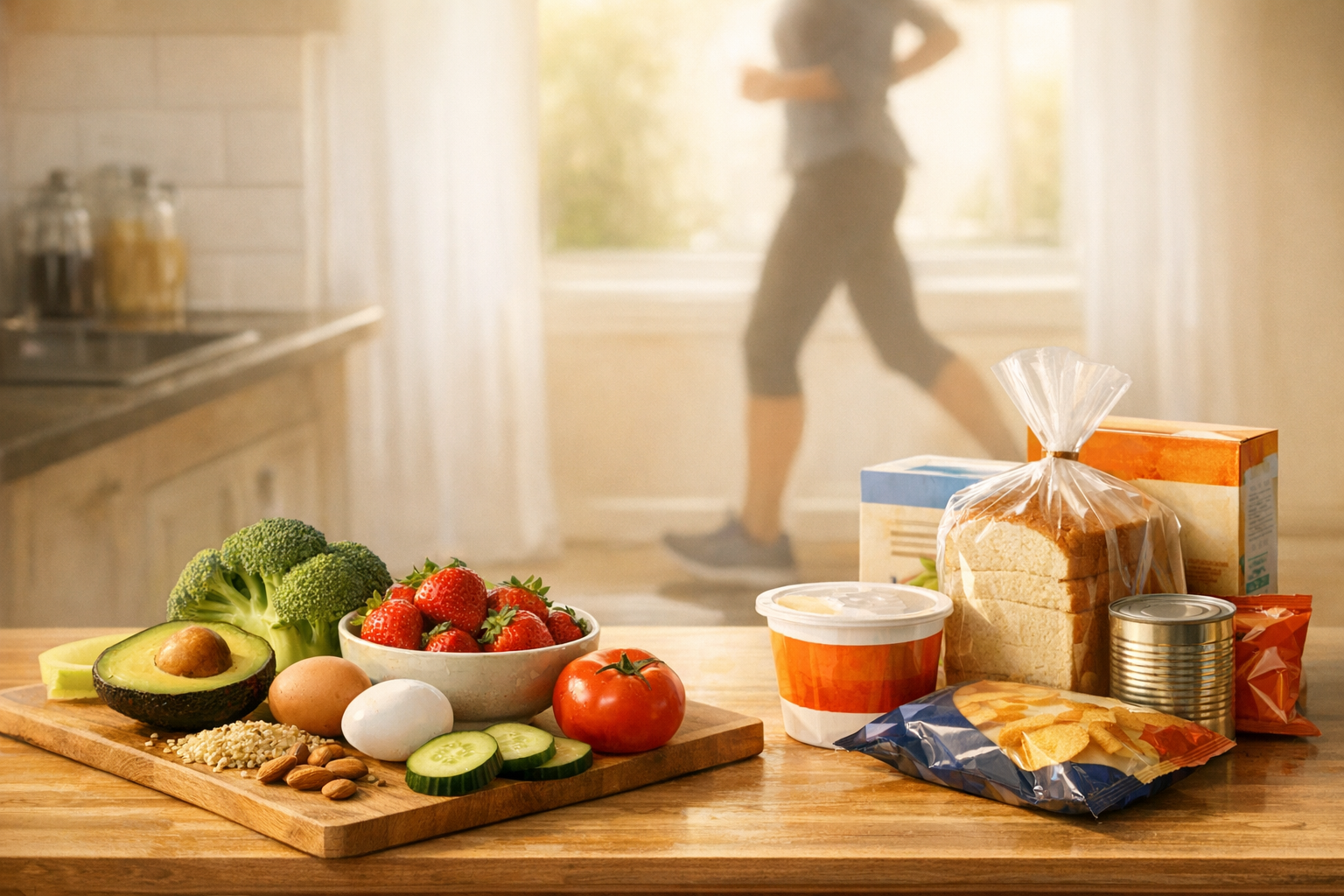
A new peer-reviewed study in Radiology adds a musculoskeletal angle to the conversation about ultra-processed foods: among adults at risk for knee osteoarthritis, eating more ultra-processed food was linked with more fat stored inside the thigh muscles.
The finding does not prove that these foods cause muscle changes or knee problems. But it raises an important healthy living question for readers in Schaumburg and across the U.S.: diet quality may matter not only for weight or heart health, but also for the tissues that help support everyday movement.
What Researchers Studied
The study analyzed data from 615 participants in the NIH Osteoarthritis Initiative, a U.S. research project focused on knee osteoarthritis. According to the Radiological Society of North America, the group included 275 men and 340 women, with an average age of about 60 and an average BMI of about 27.
Researchers used non-enhanced MRI scans to look at thigh muscle fat infiltration, meaning fat located within muscle tissue. They also assessed how much of each participant’s diet came from ultra-processed foods. On average, about 41% of the prior-year diet in this study came from ultra-processed foods.
The main result: higher ultra-processed food intake was associated with greater fat infiltration in thigh muscles. The association remained after researchers adjusted for calories, fat intake, physical activity and sociodemographic factors.
Why Thigh Muscle Fat Matters for Knees
The thigh muscles help stabilize and move the knee. When researchers talk about fat infiltration inside muscle, they are describing a change in muscle quality, not simply body size. More fat within muscle tissue may reflect poorer muscle composition, which could matter for people already at risk for knee osteoarthritis.
Knee osteoarthritis is a joint condition in which the knee can become painful, stiff or harder to use over time. Common reasons to discuss knee symptoms with a qualified health professional include persistent knee pain, swelling, stiffness after rest, reduced range of motion, or difficulty with stairs, walking or daily activities.
For Schaumburg-area readers, the study is best understood as national research with practical relevance: many people make daily food choices in the context of busy schedules, packaged meals and limited time. This study does not create a local diagnosis or prediction, but it does highlight why food quality and mobility can be connected topics.
What Counts as Ultra-Processed Food?
Ultra-processed foods are generally packaged, industrially formulated products that often contain ingredients not typically used in home cooking. They may be designed for long shelf life, convenience and strong flavor. Not every packaged food is the same, and this study did not test a specific product or brand.
For general education, a practical way to think about diet quality is to look at overall patterns rather than a single snack or meal. Readers can ask a doctor, registered dietitian or other qualified provider questions such as:
- How can I understand the role of ultra-processed foods in my usual eating pattern?
- Would nutrition counseling be appropriate for my health goals or medical history?
- If I have knee pain, should I ask about muscle strength, mobility or physical therapy evaluation?
- Are there health conditions or medications that should affect how I approach diet or activity changes?
What the Study Can and Cannot Show
This was an observational analysis. That means it can identify an association, but it cannot prove cause and effect. People who eat more ultra-processed foods may differ in other ways that are hard to fully measure, even when researchers adjust for key factors.
There are other limits. Dietary assessment depends on how foods are reported and categorized. The study focused on adults at risk for knee osteoarthritis, so the findings may not apply the same way to younger adults, athletes, or people without knee osteoarthritis risk. MRI-based measures are useful for research, but this study does not mean people need imaging based on diet alone.
Still, the research is notable because it connects a common nutrition topic with muscle composition measured by MRI, using data from a well-known U.S. osteoarthritis cohort.
The Takeaway
The study suggests that higher ultra-processed food consumption is associated with more fat inside thigh muscles among adults at risk for knee osteoarthritis, independent of several measured factors. It does not prove that changing diet will reverse muscle fat or prevent knee osteoarthritis. It does, however, support a broader healthy living message: nutrition, muscle health and joint function may be linked in ways researchers are still working to understand.
Educational note: This article is for general educational purposes only and is not medical advice. Readers should talk with their doctor or another qualified provider about their own health, diet, joint symptoms or activity plans. In an emergency, call 911.
This article is an original summary based on information published by the Radiological Society of North America, Radiology, and PubMed.
Sourcesrsna.org thigh muscle fat and osteoarthritisdoi.org radiol.251129pubmed.ncbi.nlm.nih.gov 41979462
More in Health & Wellness HIIT Study Points to Muscle Preservation in Older AdultsOct 9, 2026 Mezzetta Peperoncini Recall: What Illinois Shoppers Should CheckOct 2, 2026 Ravioli Recall Highlights Hidden Shellfish Allergy RiskOct 2, 2026 Raw Milk Cheese Recall Linked To E. Coli InvestigationOct 2, 2026
Share this articleFacebookXLinkedIn
Explore SchaumburgEvents →Things to Do →Coupons →Classifieds →Jobs →Videos →
SPONSORED

Business Name
Service • Service
Short description of the business.
Licensed

Paid placement. We don't endorse this business. Please verify licenses before hiring.
Keep reading
More local news and guides from Schaumburg Marketplace.