


Schaumburg Marketplace
Connecting Local Business
And Empowering Community
951 N Plum Grove Rd, Suite C
Schaumburg, IL 60173
◆ CONNECTING LOCAL BUSINESS · EMPOWERING COMMUNITY


Health & Wellness
Cell Antenna Pathway Offers Clues to Birth Heart Defects
A new PLOS Biology study links a tiny cell structure and TAK1 signaling to heart development, offering clues to some congenital heart defects while leaving clinical questions open.
September 21, 2026 · 3 min read
I'm a paragraph. I'm connected to your collection through a dataset. Click Preview to see my content. To update me, go to the Data Manager.
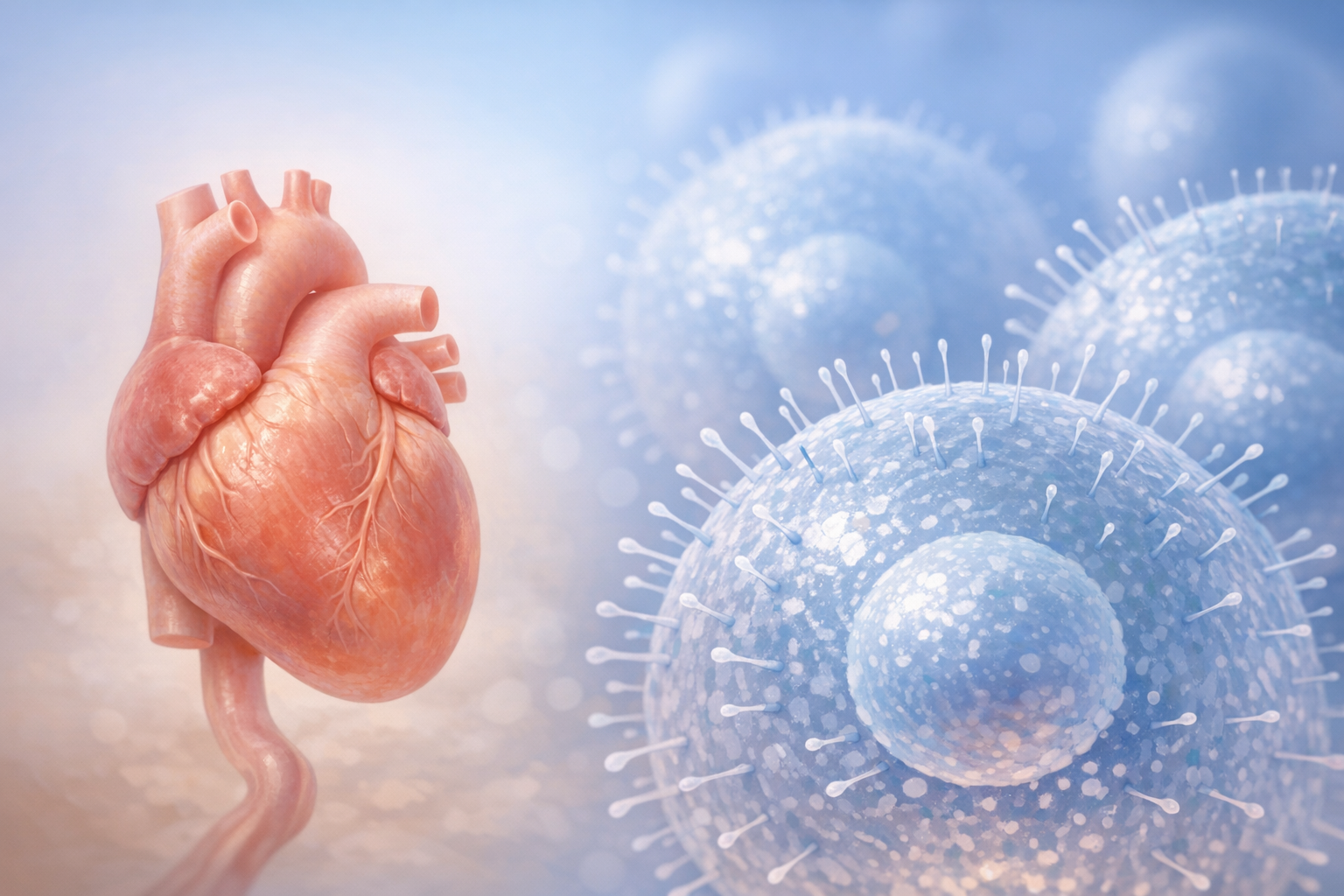
A new peer-reviewed study is drawing attention to a tiny structure on cells that may help explain how some congenital heart defects begin before birth. The research, published August 4, 2026 in PLOS Biology, focuses on the primary cilium, a microscopic projection often described as a cell’s signaling antenna.
The study identifies a signaling hub involving TAK1, TAB2, and PKA-Cα at the primary cilium. In laboratory and model-system work, that hub appeared important for cardiomyogenesis, the process through which developing cells become heart muscle cells, and for broader heart development.
What The Study Found
The research team combined several lines of evidence, including human genetic analysis, zebrafish experiments, and human stem cell and gastruloid models. Together, those approaches suggested that disrupted signaling at the primary cilium can interfere with pathways related to TGFB and BMP signaling, which are involved in early development.
ScienceDaily’s summary of the University of Copenhagen-led work noted that congenital heart disease affects roughly two out of every 100 newborns worldwide. The new study does not say that this pathway explains all congenital heart defects. Instead, it points to one biologically plausible mechanism that may contribute to some cases, especially when heart findings appear alongside problems in other organs.
Why A Cell “Antenna” Matters
The primary cilium helps cells receive and organize signals from their surroundings. During early development, those signals help guide where cells go and what they become. If that communication system is disrupted, organs that rely on carefully timed developmental signals may be affected.
That is why the study’s authors also discuss possible effects beyond the heart. Ciliary signaling is involved in the development of multiple body systems, and disruptions may be relevant to the brain, kidneys, and skeleton in some syndromic congenital conditions. The exact range of effects in people still needs more research.
What This Means For Families
For readers in Schaumburg and across the United States, the practical takeaway is not a new test or treatment. This is discovery science. It may help researchers better understand why some congenital heart defects happen, but it does not change care for an individual child or pregnancy by itself.
Congenital heart defects are structural heart problems present at birth. Some are found before birth, some are noticed soon after delivery, and others may be identified later. Warning signs that families are commonly told to discuss promptly with a qualified clinician include bluish or grayish color, unusual breathing, tiring or sweating during feeding, poor growth, fainting, or shortness of breath with activity. In an emergency, call 911.
Questions To Ask A Qualified Provider
For a baby, child, or pregnancy affected by a known or suspected heart defect, families can use research like this as a starting point for careful conversations rather than conclusions. Helpful questions may include:
- What type of heart defect is present or suspected?
- Does the pattern suggest an isolated heart finding or a broader syndrome?
- Would genetic counseling or genetic testing be relevant in this situation?
- What signs should prompt urgent medical attention?
- How will heart growth and function be followed over time?
What Remains Uncertain
The study is important, but it has limits. The evidence includes human genetic data along with zebrafish and human cell-based models. That combination is useful for studying early development, but it is not the same as proving a direct cause in every human patient.
The authors and related summaries note that the exact mechanism in humans is still being worked out. Researchers also need to learn how often this pathway is involved, which genetic changes matter most, and whether this knowledge can eventually support prevention, diagnosis, or therapy. No immediate clinical application should be assumed from this single study.
This article is for general educational purposes only and is not medical advice. Readers should talk with their doctor or another qualified provider about their own health or their child’s health. In an emergency, call 911.
This article is an original summary based on information published by PLOS Biology, PubMed, ScienceDaily, and the CDC.
Sourcesjournals.plos.org articlepubmed.ncbi.nlm.nih.gov 42550797sciencedaily.com 260912220103cdc.gov index
More in Health & Wellness Mezzetta Peperoncini Recall: What Illinois Shoppers Should CheckOct 2, 2026 Ravioli Recall Highlights Hidden Shellfish Allergy RiskOct 2, 2026 Raw Milk Cheese Recall Linked To E. Coli InvestigationOct 2, 2026 Lior Cinnamon Recall Includes Illinois DistributionOct 2, 2026
Share this articleFacebookXLinkedIn
Explore SchaumburgEvents →Things to Do →Coupons →Classifieds →Jobs →Videos →

Keep reading
More local news and guides from Schaumburg Marketplace.